BUSINESS
Rashtriya Poshan Maah 2026 Begins Today: Know What the Government Is Doing for Pregnant Women, Children and Families
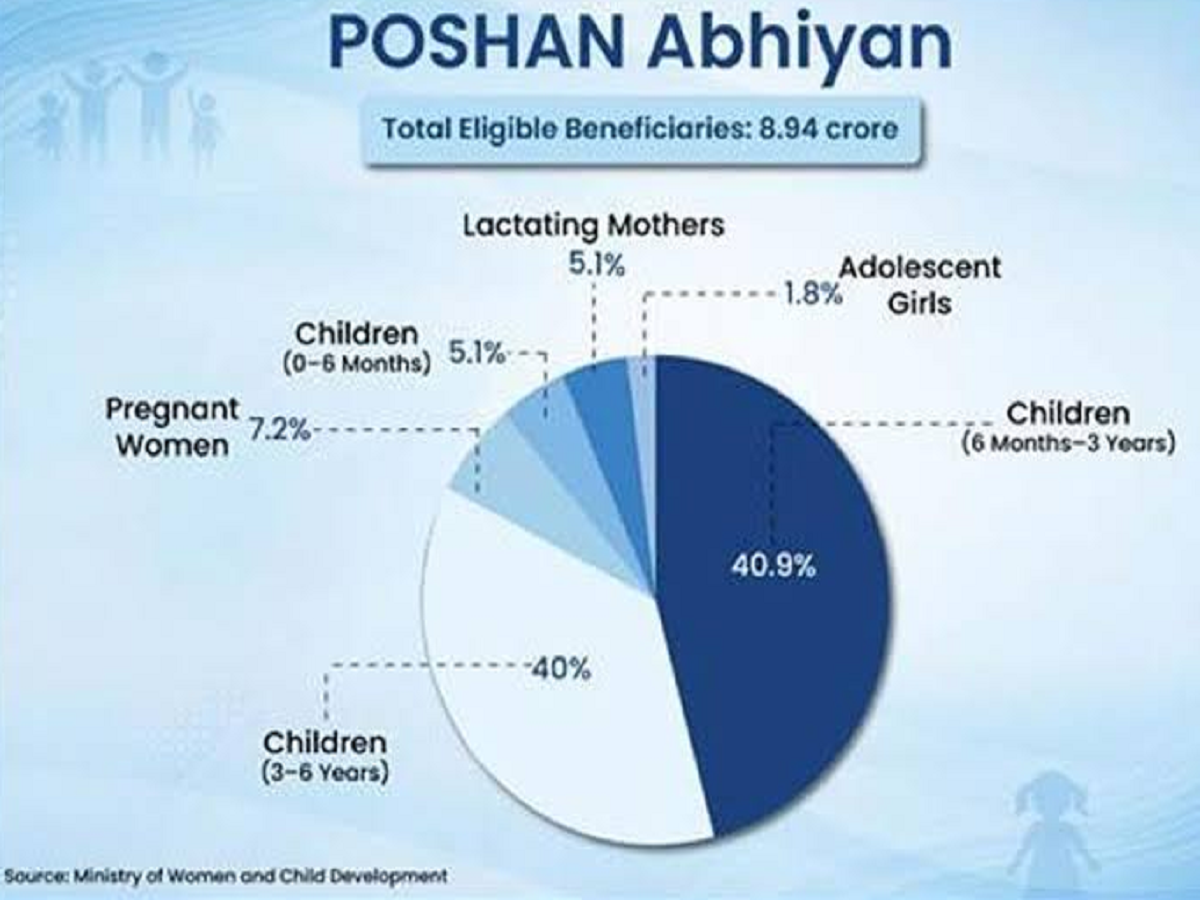
The Government of India is launching the 9th Rashtriya Poshan Maah 2026 today, September 9, with a renewed focus on nutrition, maternal health, child development and community participation.
This year's campaign comes with the theme “Hamari Anganwadi, Hamari Jimmedari”, placing Anganwadi Centres at the centre of community-led efforts related to nutrition, childcare and early childhood development.
The month-long campaign will be observed across States and Union Territories through activities at Anganwadi Centres, schools, Panchayats and households.
What is Rashtriya Poshan Maah?
Rashtriya Poshan Maah is observed every September as part of the government's broader nutrition mission. It aims to spread awareness about healthy eating, maternal nutrition, child growth, hygiene and appropriate childcare practices.
The initiative operates under Mission Poshan 2.0, which brings together POSHAN Abhiyaan, Anganwadi Services and the Scheme for Adolescent Girls under a common framework.
What is special about Poshan Maah 2026?
This year's campaign focuses on five major areas that directly affect families.
1. Focus on protein and a balanced diet
One of the biggest priorities is encouraging families to consume a more diverse diet with adequate protein.
Anganwadi Centres will organise recipe demonstrations using affordable, locally available foods such as:
-
Pulses and legumes
-
Cereals and millets
-
Fruits and vegetables
-
Nuts and seeds
-
Milk and milk products
-
Eggs and other protein-rich foods
The government will also organise Poshan Melas and awareness campaigns to explain practical ways families can include more nutritious foods in everyday meals.
2. Fresh hot meals at Anganwadi Centres
Another important focus is improving the availability and quality of fresh, hot-cooked meals under the Supplementary Nutrition Programme.
States and Union Territories are being encouraged to introduce menu rotation using foods such as millets, pulses and seasonal vegetables.
Parents, Panchayats, Self-Help Groups and community members can also participate in activities and tasting sessions at Anganwadi Centres.
3. Parents can check what meals are being served
The 2026 campaign also puts greater emphasis on transparency.
Supplementary Nutrition Programme Menu Boards will be displayed at Anganwadi Centres so that families can see the daily menu and understand the nutrition entitlements available.
New Anganwadi Management Committees (AMCs) will also play a role in monitoring service delivery and meal quality.
This means community participation is being made an important part of checking how nutrition services are delivered.
4. Special attention to children aged 0 to 6 years
The campaign isn't limited to food.
For children aged 0 to 3 years, Anganwadi Workers will conduct home visits and counsel families on responsive caregiving and early stimulation.
The government has also planned a drive to record developmental milestones of enrolled children aged 0–3 years. Children who require additional intervention can be referred through existing health-system mechanisms.
For children aged 3 to 6 years, Anganwadi Centres will focus on early learning through play-based activities and the government's early childhood education framework.
5. Pregnant and lactating women get special focus
Pregnant and lactating women are another major focus of Poshan Maah 2026.
The campaign will promote better maternal nutrition and encourage eligible women to access government maternity benefits.
This year's Poshan Maah also marks 10 years of the Pradhan Mantri Matru Vandana Yojana (PMMVY), the government's maternity benefit programme.
A 100% saturation drive is planned to identify and enrol eligible pregnant and lactating women and accelerate Direct Benefit Transfers under PMMVY.
What should families do?
If you have children enrolled at an Anganwadi Centre, or if there is an Anganwadi Centre in your locality, families can participate in the activities being organised during Poshan Maah.
Parents can:
-
Check the nutrition menu displayed at their Anganwadi Centre.
-
Participate in nutrition and recipe demonstrations.
-
Ask Anganwadi Workers about child-development milestones.
-
Seek information about supplementary nutrition services.
-
Check eligibility for maternity benefits under PMMVY.
-
Take part in community meetings and awareness activities.
Pregnant women and families with young children should particularly use these programmes to understand what nutrition and childcare support is available through their local Anganwadi Centre.
Why this matters
The government's approach this year goes beyond simply telling people to “eat healthy.” It combines nutrition, maternal care, early childhood development, community monitoring and Anganwadi services.
The idea is to make Anganwadi Centres not only places where children receive nutrition and care, but also community hubs where parents can access information and participate in improving local services.
Bottom line
Rashtriya Poshan Maah 2026 is a month-long government campaign with a strong focus on families, pregnant women and young children. Under the theme “Hamari Anganwadi, Hamari Jimmedari,” the government is encouraging communities to take a more active role in nutrition, childcare and early childhood development.
For families, the most useful step is simple: visit your local Anganwadi Centre and ask what Poshan Maah activities and services are available in your area.