ENTERTAINMENT
Ramayana Then vs Now: How Mandodari’s Character Has Changed from Ramanand Sagar’s TV Show to Nitesh Tiwari’s Film
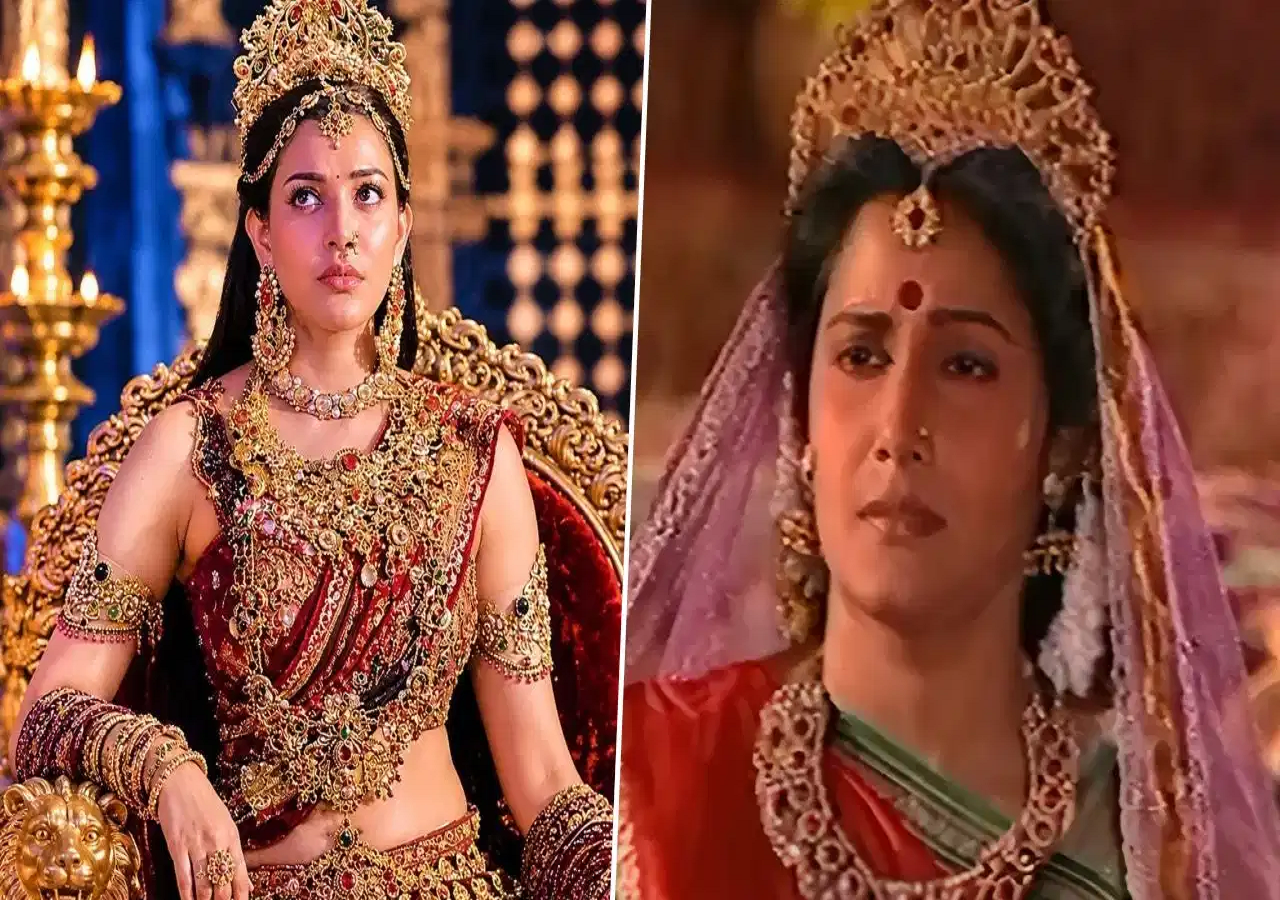
The character of Mandodari, the wife of Ravana and queen of Lanka, holds a special place in the Ramayana. Known for her wisdom, dignity and devotion, she is often remembered as a voice of reason who repeatedly tried to guide Ravana towards the path of righteousness.
Over the years, Mandodari has been portrayed in different ways across television and cinema. Ramanand Sagar's iconic 1987 television series presented her as a wise and morally strong queen, while Nitesh Tiwari's ambitious cinematic adaptation brings actress Kajal Aggarwal into the role.
The two portrayals offer different approaches to the same mythological character.
Aparajita Bhushan vs Kajal Aggarwal: Two actresses, one iconic character
In Ramanand Sagar's television series 'Ramayana', the role of Mandodari was played by Aparajita Bhushan, daughter of veteran actor Bharat Bhushan.
Her composed expressions, dignified screen presence and measured dialogue delivery helped establish Mandodari as a respected and memorable character among television audiences.
In Nitesh Tiwari's film adaptation, Kajal Aggarwal takes on the role of the queen of Lanka. Her portrayal brings a new cinematic interpretation of Mandodari, with appearances in royal settings and scenes alongside Yash, who plays Ravana.
<text color="secondary" size="xs">Kajal Aggarwal as Mandodari in the new adaptation</text>
Mandodari's conversations with Ravana: A major difference
One of the most significant aspects of Mandodari's character in the television series was her relationship with Ravana and her repeated attempts to make him understand the consequences of his decisions.
In Ramanand Sagar's version, their conversations were given considerable screen time. Mandodari openly questioned Ravana's actions and urged him to return Sita to Lord Ram with respect.
She also referred to the advice of other members of the family, including her father Mayasura, Malyavan and Vibhishana, who opposed Ravana's decision.
The film adaptation takes a more concise approach to these interactions. With its focus on cinematic storytelling, visual spectacle and major events of the epic, the first instalment gives less room to lengthy discussions between Mandodari and Ravana.
Mandodari as the moral voice of Lanka
In the television version, Mandodari was portrayed as much more than Ravana's wife. She was presented as a queen who understood the dangers of arrogance, injustice and unnecessary conflict.
She repeatedly attempted to prevent Ravana from moving towards destruction and represented the moral conscience of Lanka. Her character also reflected concern about the consequences of war for her family and kingdom.
In the newer cinematic interpretation, her role is presented within a larger visual narrative. The emphasis is more on the royal world of Lanka and the central events of the story, making her portrayal comparatively more compact in the first instalment.
Ravana's death and Mandodari's grief
Another important moment in Mandodari's story is her reaction after Ravana's defeat.
Ramanand Sagar's 'Ramayana' gave considerable emotional weight to her mourning following Ravana's death. The sequence portrayed her personal grief while also reflecting the larger message of the triumph of righteousness over evil.
However, this particular post-war sequence does not appear in the first instalment of Nitesh Tiwari's film, as the story has not yet reached that stage.
Two different interpretations of a timeless character
The biggest difference between the two portrayals lies in their storytelling formats. Ramanand Sagar's television series had the space to explore Mandodari's conversations, emotions and moral arguments in greater detail.
Nitesh Tiwari's film, meanwhile, approaches the epic through large-scale cinematic storytelling, with greater emphasis on visual presentation and major narrative events.
While Aparajita Bhushan's portrayal remains memorable for its detailed depiction of Mandodari's wisdom and dignity, Kajal Aggarwal brings a fresh interpretation to the character for a new generation of viewers.
Ultimately, both versions highlight the importance of Mandodari in the Ramayana, a queen whose wisdom and repeated warnings reveal the human and moral dimensions of Lanka's story.