NATIONAL
'Ram ke naam par Nahi to kya Allah ke Naam...'Mulayam's daughter-in-law shows defiance; warns of taking up arms.
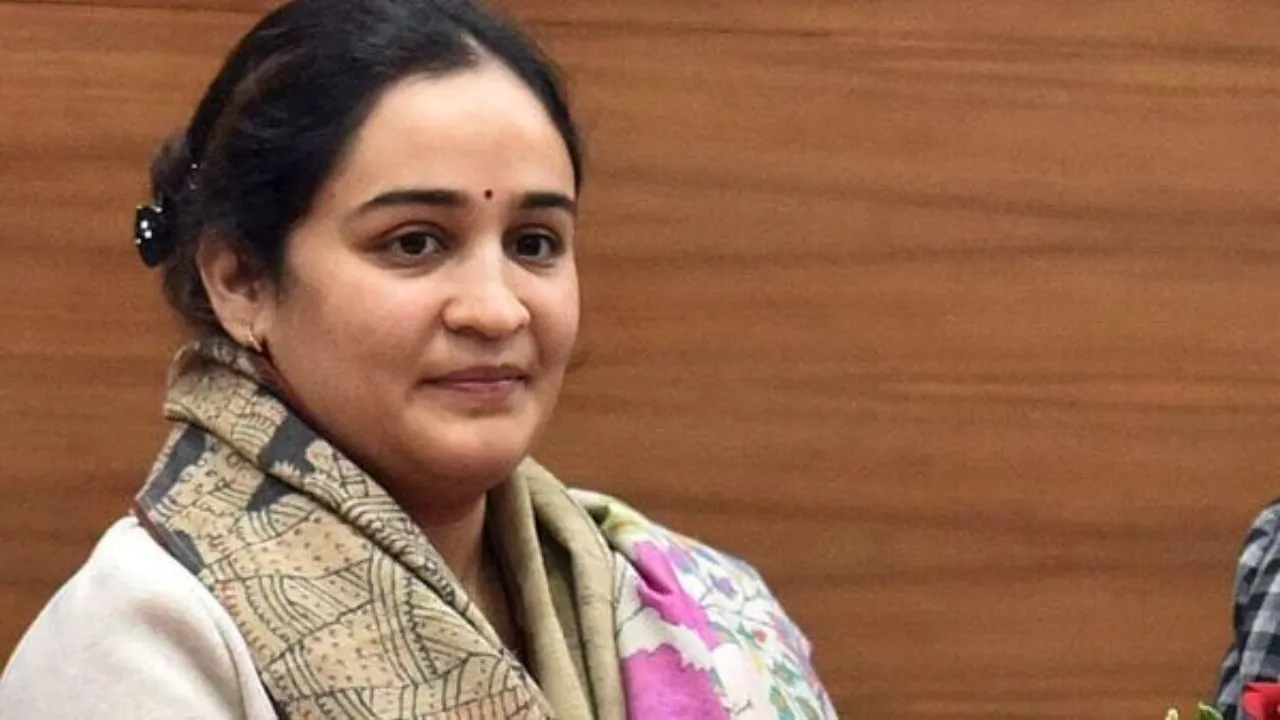
“If Not in Ram’s Name, Then in Allah’s?” Aparna Yadav’s Remarks Stir Political Debate in UP
Bhadohi, Uttar Pradesh: A speech by Uttar Pradesh State Women’s Commission Vice Chairperson and BJP leader Aparna Bisht Yadav has sparked sharp political reactions after she made strong remarks on government schemes, religion, and social unity during a Virat Hindu Sammelan (Grand Hindu Convention) held in Bhadohi.
Addressing a large gathering, Aparna Yadav questioned the criticism over naming government welfare schemes after Lord Ram, asking whether such initiatives should instead be named after Allah. Her remarks, delivered in an assertive tone, quickly went viral and added fuel to the ongoing political debate around religion, governance, and nationalism.
Strong Defence of Scheme Naming and Cultural Identity
Speaking as the chief guest at the event, Aparna Yadav responded to criticism surrounding the naming of welfare schemes such as the proposed VB G RAM R initiative, which some opposition leaders have objected to for its religious reference. She said the objections were politically motivated and disconnected from India’s cultural roots.
She argued that Lord Ram represents ideals deeply embedded in Indian society and reminded the audience that Mahatma Gandhi frequently invoked Ram in his prayers and public life. According to her, questioning the use of Ram’s name reflects a misunderstanding of India’s civilizational values.
Yadav stated that India is currently living in what she described as a “Ram-era,” emphasizing that cultural symbols should not be politicized selectively. Her comments were met with applause from sections of the audience attending the convention.
Call for Hindu Unity and National Vigilance
During her address, Aparna Yadav placed significant emphasis on Hindu unity, warning that internal divisions weaken society. Referring to developments in neighboring countries such as Bangladesh and Pakistan, she claimed that reports of violence and persecution against Hindus highlight the importance of solidarity within the community.
Quoting Prime Minister Narendra Modi’s slogan “Ek rahenge toh safe rahenge” (United we remain safe) and Uttar Pradesh Chief Minister Yogi Adityanath’s statement “Batenge toh katenge” (Divided, we fall), she urged people to take these messages seriously rather than treating them as mere political slogans.
According to her, unity is essential not only for cultural preservation but also for national security. She stressed that a divided society becomes vulnerable to external and internal threats.
Remarks on Illegal Infiltration and Public Responsibility
Aparna Yadav also appealed to citizens to actively cooperate with the Election Commission’s Special Intensive Revision (SIR) campaign. She urged people to report suspected illegal immigrants to the authorities, stating that maintaining the integrity of the electoral system is a collective responsibility.
She framed vigilance against infiltration as a matter of national interest, calling upon citizens to remain alert and proactive in safeguarding democratic processes.
Statement on Self-Defence Sparks Controversy
Toward the end of her speech, Aparna Yadav made a remark that has become the most controversial aspect of her address. She said that if the safety of society demands it, she would not hesitate to consider taking up arms for self-defence. While supporters viewed the statement as symbolic and emotional, critics have raised concerns over its implications.
Political observers note that such statements often resonate strongly at mass gatherings but can also invite scrutiny from opposition parties and civil society groups. As of now, no official clarification has been issued regarding the remark.
Political Reactions Expected
Aparna Yadav’s speech has already triggered discussions across political circles and social media platforms. Supporters within the BJP and affiliated organizations have praised her for speaking assertively on cultural identity, while opposition leaders are expected to respond sharply in the coming days.
With Uttar Pradesh remaining a politically sensitive state, such statements are likely to influence ongoing debates around religion, governance, and public discourse. Whether this speech leads to broader political consequences or remains a momentary flashpoint will become clearer as reactions continue to unfold.