NATIONAL
Punjab Amends Minor Mineral Policy: Mining Industry Set for Major Boost, Illegal Operations to Take a Hit
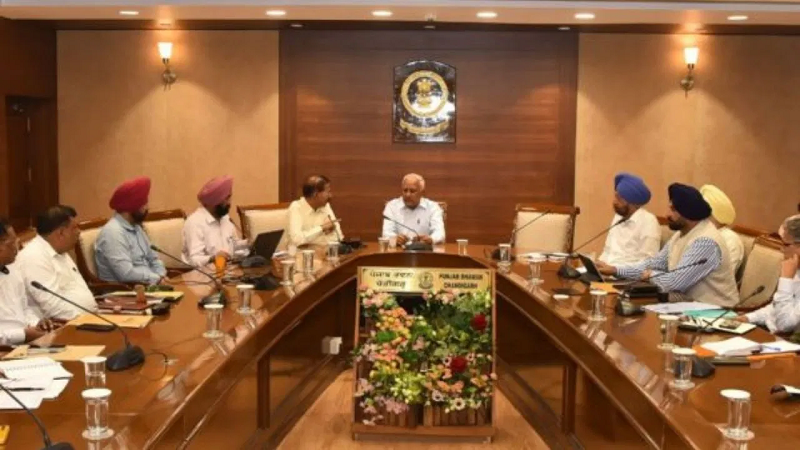
The Punjab government, under the leadership of Chief Minister Bhagwant Singh Mann, has approved far-reaching amendments to the Punjab Minor Mineral Policy, marking one of the most significant reforms in the state’s mining sector in recent years. The changes are expected to ensure a steady supply of raw materials, curb illegal mining and corruption, reduce construction costs for consumers, boost state revenue, and dismantle long-standing monopolies.
The amended policy was cleared by the Punjab Cabinet after detailed consultations with industry stakeholders. It introduces new mining categories, revamps the auction mechanism, and simplifies regulatory procedures, signalling a clear shift towards transparency, competition, and citizen-friendly governance.
Removing bottlenecks and curbing illegal mining
Explaining the intent behind the reforms, Mines and Geology Minister Barinder Kumar Goyal said the government is determined to remove complexities that have plagued the mining sector for years. He noted that the move towards transparent online auctions will not only raise state revenues but also significantly curb illegal mining while providing a level playing field to genuine operators.
According to the minister, Punjab has long faced a shortage of authorised mining sites, with only about 35 operational mines across the state. This limited legal supply was insufficient to meet the growing demand for construction material for roads, housing, and infrastructure projects, creating a vacuum that allowed illegal mining and unregulated supply chains to thrive.
Crusher mining sites to support local industry
One of the key reforms under the revised policy is the introduction of Crusher Mining Sites (CRMS), aimed at resolving persistent issues faced by the crusher industry. Earlier, auctions of mined material were largely restricted to commercial mining sites, leading to chronic shortages of raw material.
Despite owning land with gravel reserves, crusher owners were not allowed to extract material themselves and were forced to depend on limited CRMS output or procure raw material from other states at higher costs. The new framework is expected to stabilise supply, reduce transportation costs, and strengthen local industry competitiveness.
Land-owner mining sites to break monopolies
Another major change is the introduction of Land-Owner Mining Sites (LMS) for sand mining, alongside existing commercial and public mining sites. In the past, sand mining often stalled because landowners were reluctant to allow unknown contractors onto their land. At the same time, many landowners directly approached the government seeking permission to mine their own land.
Under the LMS model, landowners can now mine sand on their land themselves or through authorised persons, after paying royalty to the state. This is expected to substantially increase the number of legal mining sites, improve sand availability, lower prices for consumers, and generate additional revenue for the government. The move also opens new business opportunities for local residents and helps dismantle entrenched monopolies in the sector.
Faster clearances and industry backing
The revised policy also addresses long-standing regulatory delays. Earlier, approvals such as environmental clearances from bodies like the State Environment Impact Assessment Authority (SEIAA) often took seven to nine months, and in some cases even years. These processes have now been put into mission mode, with multiple clearances being processed simultaneously to ensure faster decision-making without diluting environmental safeguards.
With industry backing and streamlined procedures, the Punjab government believes these amendments will not only formalise the mining sector but also create a more efficient, transparent, and growth-oriented ecosystem—benefiting both the state exchequer and the construction industry at large.