BUSINESS
Planning for Your Child's Future? Experts Share 5 Smart Financial Strategies Every New Parent Should Follow
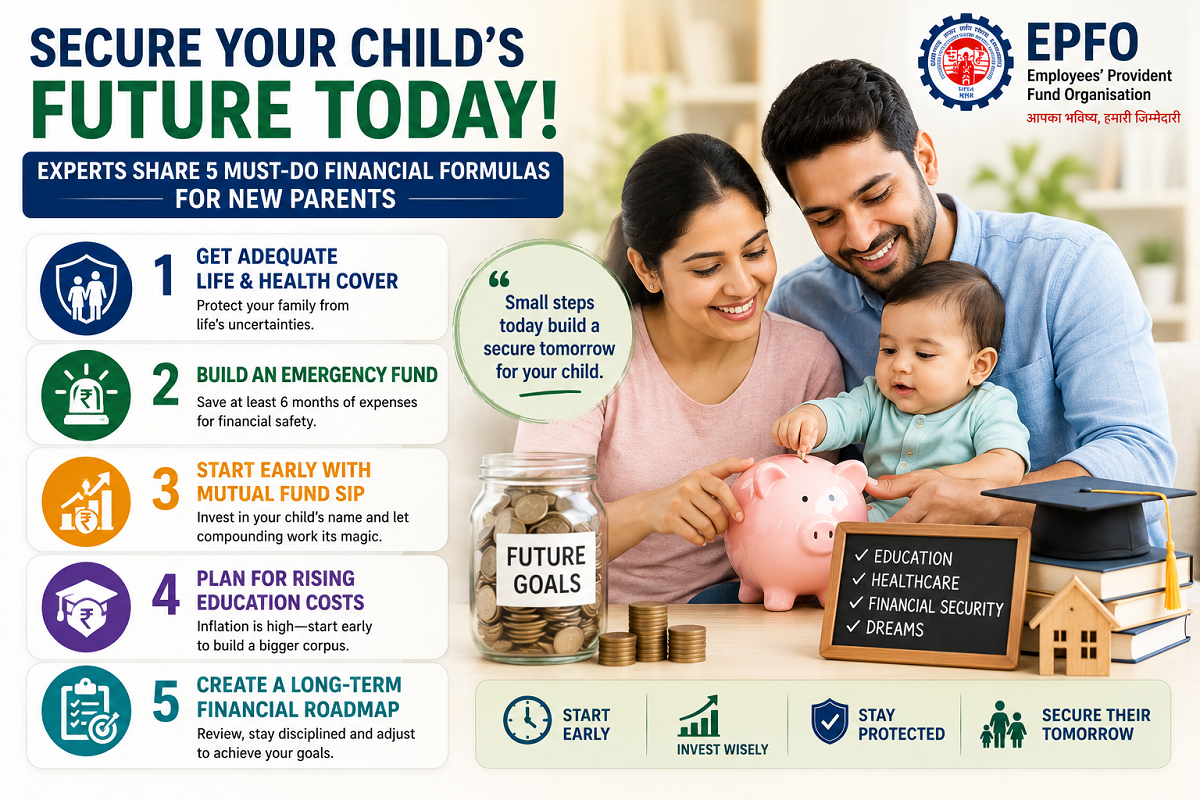
Wealth Management for New Parents: Welcoming a child is one of life's most memorable milestones, but it also brings long-term financial responsibilities. While new parents often focus on daily care and upbringing, experts emphasize that early financial planning can play a crucial role in securing a child's future.
From education and healthcare to emergency preparedness, building a strong financial foundation from the beginning can help parents meet future expenses with greater confidence. Here are five expert-recommended financial strategies that every new parent should consider.
1. Prioritize Adequate Life and Health Insurance
Financial protection should be the first step after becoming a parent.
Experts recommend purchasing a comprehensive term life insurance policy to ensure your family remains financially secure in the event of an unforeseen situation. A suitable life cover can help protect your child's education and future financial needs.
In addition, maintaining a comprehensive health insurance policy is equally important. Rising healthcare costs can significantly impact household finances, and adequate medical coverage helps prevent unexpected expenses from disrupting long-term financial goals.
2. Build an Emergency Fund Covering at Least Six Months of Expenses
Unexpected situations such as job loss, medical emergencies, or business setbacks can arise at any time.
Financial planners generally advise maintaining an emergency fund equal to at least six months of household expenses. Ideally, this money should remain easily accessible through savings accounts or liquid investment options.
Having an emergency reserve allows families to handle urgent financial needs without withdrawing money from long-term investments meant for their child's future.
3. Start Investing Early Through a Systematic Investment Plan (SIP)
Beginning long-term investments early gives parents more time to benefit from the power of compounding.
Experts often recommend investing in equity mutual funds through a Systematic Investment Plan (SIP) for goals such as higher education. Starting early can reduce the monthly investment required to build a substantial education corpus over the years.
Some financial planners also suggest maintaining a dedicated investment specifically for the child's future to improve financial discipline and reduce the temptation to use those funds for other purposes.
4. Plan for Rising Education Costs
Higher education expenses continue to increase over time due to inflation.
For illustration, if a professional education costs ₹30 lakh today, an annual education inflation rate of around 8% could increase that cost substantially over the next 18 years.
Financial experts highlight that delaying investments—even by a year—may require significantly higher monthly contributions later or result in a shortfall in the target corpus. Starting early allows parents to spread investments over a longer period while potentially reducing the financial burden.
Before investing, parents should assess their risk tolerance, investment horizon, and financial goals, as actual returns are not guaranteed.
5. Create a Long-Term Financial Roadmap
Beyond individual investments, experts recommend developing a comprehensive financial plan covering major milestones in a child's life.
A well-rounded financial roadmap may include:
-
Education funding
-
Healthcare expenses
-
Emergency savings
-
Insurance protection
-
Long-term wealth creation
-
Periodic review of financial goals
Reviewing investments annually and adjusting contributions as income grows can help parents stay on track toward achieving long-term objectives.
Why Early Financial Planning Matters
Many parents postpone financial planning because they are occupied with immediate childcare responsibilities. However, beginning early provides several advantages:
-
More time for investments to grow through compounding.
-
Better preparation for rising education and healthcare costs.
-
Reduced financial stress during emergencies.
-
Greater flexibility in achieving long-term goals.
-
Improved financial security for the entire family.
Even small, consistent investments made early can have a meaningful impact over an extended period.
Building Financial Security for Your Child
Financial experts generally agree that combining adequate insurance, an emergency fund, and disciplined long-term investing creates a strong foundation for a child's future.
Rather than waiting until major expenses arise, parents who begin planning soon after their child is born are often better positioned to manage education costs, healthcare needs, and other long-term financial commitments.
Disclaimer
This article is intended for informational purposes only and should not be considered financial or investment advice. Mutual funds and other market-linked investments are subject to market risks, and returns are not guaranteed. Readers should carefully assess their financial situation and consult a qualified financial advisor before making investment or insurance decisions.