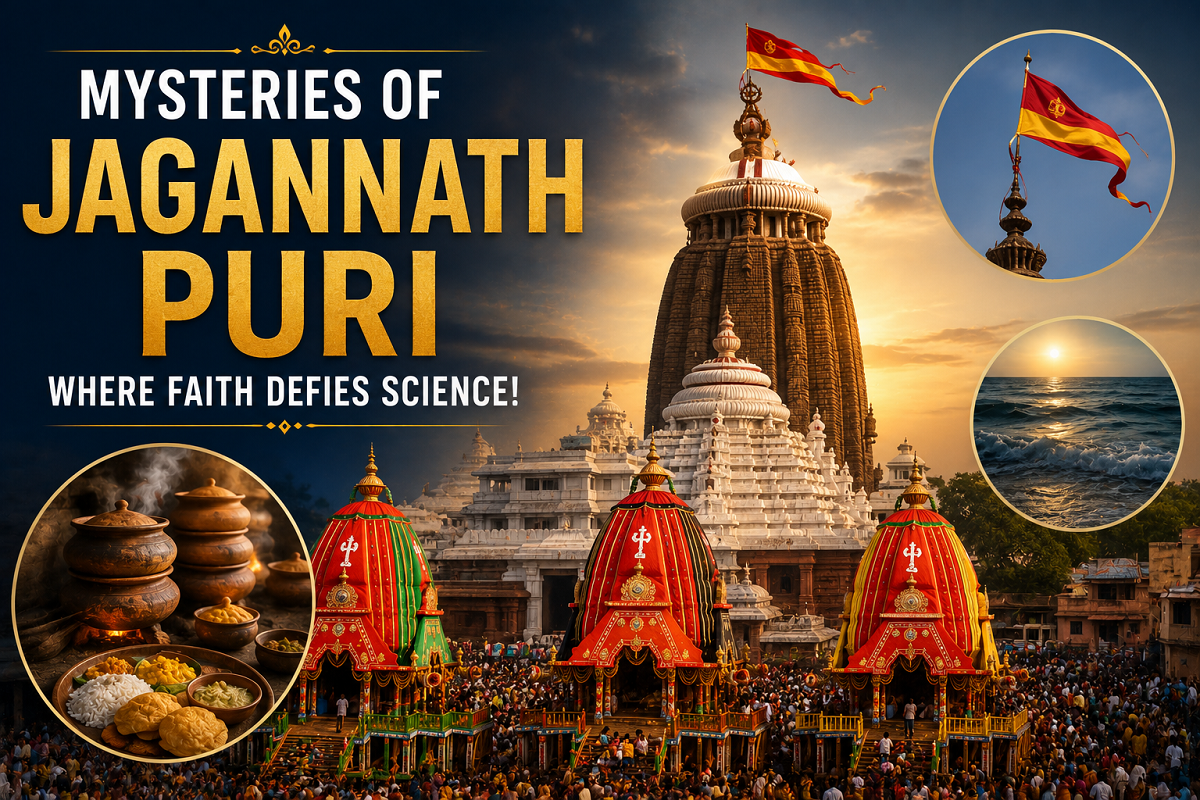
The Jagannath Temple in Puri, Odisha, is one of India's most revered pilgrimage sites and the spiritual center of the world-famous Jagannath Rath Yatra. Beyond its religious importance, the temple has long been associated with several fascinating beliefs and traditions that have intrigued devotees, historians, and visitors alike.
Over the years, stories about the temple's unique customs and unusual observations have become widely discussed. While many devotees regard them as divine miracles, some researchers suggest that certain phenomena may have natural or architectural explanations. However, several claims remain part of local tradition rather than scientifically established facts.
Here is a closer look at some of the most well-known mysteries associated with the Jagannath Temple.
The Temple Flag That Appears to Defy the Wind
One of the most talked-about beliefs is that the temple's sacred flag seems to flutter in a direction opposite to the wind. Devotees often consider this a divine sign connected to Lord Jagannath.
Although this observation has become part of popular folklore, experts note that wind currents, building height, and viewing angles can sometimes create unusual visual effects. No scientific consensus confirms that the flag consistently behaves differently from the surrounding wind.
The Changing Sound of the Sea
The temple stands relatively close to the Bay of Bengal. According to a popular local belief, the sound of ocean waves becomes less noticeable after entering the temple complex, while it is clearly audible outside.
Many visitors have reported experiencing this phenomenon. Some architectural experts believe that the layout of the temple, surrounding structures, and acoustic design may influence how sound travels, though devotees often view it as one of the temple's spiritual wonders.
The Famous Mahaprasad Tradition
The temple's Mahaprasad is considered sacred by millions of devotees. Every day, food is prepared in traditional earthen pots using age-old methods that have been followed for centuries.
According to temple traditions, the quantity of Mahaprasad is believed to remain sufficient for devotees visiting the temple each day, regardless of fluctuations in crowd size. The temple's highly organized cooking system and long-standing experience in food preparation are often credited for this remarkable consistency.
The Unique Kitchen of Jagannath Temple
The temple kitchen is regarded as one of the largest functioning temple kitchens in the world. Hundreds of cooks prepare meals using traditional wood-fired ovens.
One well-known belief states that when earthen pots are stacked one above another during cooking, the top pot cooks first. While this is widely shared in popular discussions, food experts suggest that heat circulation and steam movement may contribute to the cooking process. The exact explanation continues to attract interest.
The Grand Rath Yatra
Every year, millions of devotees gather for the Jagannath Rath Yatra, during which the idols of Lord Jagannath, Lord Balabhadra, and Goddess Subhadra are placed on massive wooden chariots and pulled through the streets of Puri.
The festival symbolizes devotion, equality, and faith, attracting pilgrims from across India and around the world. It remains one of Hinduism's most significant religious celebrations.
Faith and Tradition Continue to Inspire
Many of the stories associated with the Jagannath Temple have been passed down through generations. Some are rooted in documented traditions, while others are based on local beliefs and personal experiences. Historians and researchers continue to study the temple's architecture, rituals, and cultural significance, even as devotees regard these traditions as expressions of divine grace.
Conclusion
The Jagannath Temple is celebrated not only for its rich spiritual heritage but also for the fascinating traditions that surround it. Whether viewed through the lens of faith, history, or curiosity, these stories continue to captivate millions of visitors every year.
While some popular claims remain matters of belief rather than verified scientific fact, they contribute to the enduring cultural and religious significance of one of India's most iconic temples.