BIZARRE
Manikarnika Ghat: Why is Manikarnika Ghat of Kashi world famous? You will be amazed to know its history
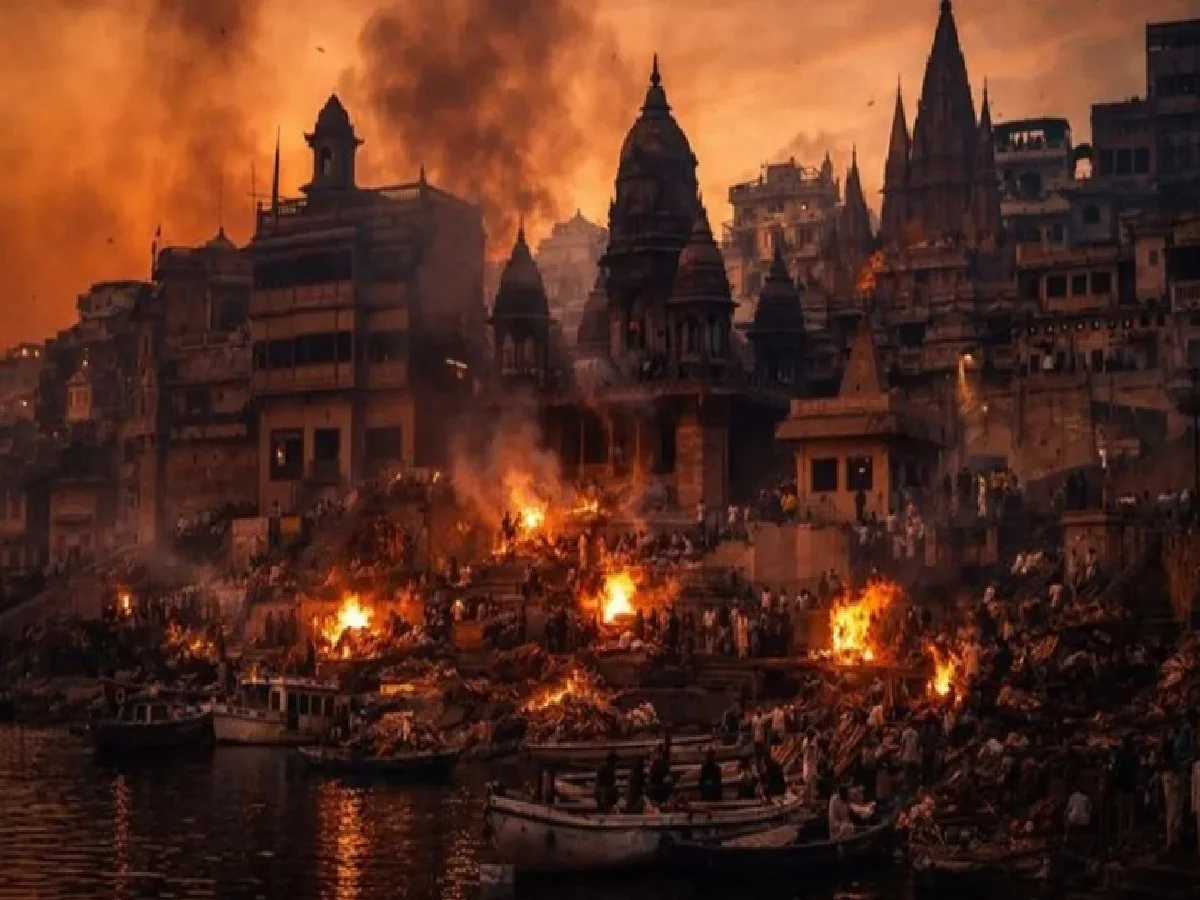
The ancient and cultural city of Varanasi (Kashi) in Uttar Pradesh is home to many magnificent and sacred ghats. However, the Manikarnika Ghat is considered the most unique and mysterious of these ghats. It is not just a ghat, but the largest and holiest cremation ground in Hinduism.
History and Mythology of Manikarnika
Hindu mythology has some interesting stories behind the name 'Manikarnika'. According to one story, Lord Vishnu created a pond (lake) here after many years of penance. When Lord Shiva and Goddess Parvati came to this pond, the pond filled with Lord Shiva's tears of joy. At that very moment, a jewel from Goddess Parvati's ear, the 'gem' (manikarnika), fell into this pond. Since then, this place has been named 'Manikarnika'.
'Muktidham' to attain salvation:
In Hinduism, it is a firm belief that a person whose body is cremated at Manikarnika Ghat directly attains 'Moksha'. That is, the soul is freed from the cycle of birth and death. According to the book Kashi Khand, Lord Shiva himself whispers the 'Tarak Mantra' into the ears of the person who leaves his body or whose last rites are performed here, which grants salvation to that soul. For this reason, old and sick people from all over India come to Kashi to spend the last days of their lives.
The most remarkable feature of Manikarnika Ghat is that the pyre fires here never go out. They burn 365 days a year. One body after another is brought here. The sight of the pyres burning before our eyes, the chanting of mantras, and the slow flow of the Ganges create an atmosphere of renunciation and peace at the same time.
Some Unique Customs at the Ghats
One of the unique customs prevalent at this ghat is Rakh Holi (Masan Holi). While Holi is celebrated with colors across the country, at Manikarnika Ghat in Kashi, Holi is played with the ashes of funeral pyres (bhasma) around Rangpanchami. It is believed that Lord Shiva plays Holi here with his followers.
Similarly, during Chaitra Navratri, city girls (prostitutes) from different parts of the country dance at night in the court of Lord Shiva. They pray to him that they will not be destined for this murky life in their next life.
According to legend, Manikarnika Ghat is not just a place of death, but a place that demonstrates the transience of human life and the highest level of spirituality. Visitors here are left with no worldly illusions and experience detachment, at least temporarily. The burning pyres along the banks of the Ganges remind people of the ultimate truth of life.
Historical Heritage and Restoration
The Maratha Empire contributed significantly to Manikarnika Ghat's modern and robust look. In the 18th century (around 1730), Rajmata Ahilyabai Holkar, the great ruler of the Holkar dynasty of Maharashtra, renovated the ghat. She built the ghat's steps, the Manikarnika Kund, and the surrounding temples, giving this historical and religious site a new identity.
It is believed that Manikarnika Ghat reminds one of the transience of ego and the world. Rich or poor, all will be reduced to ashes, this ghat constantly conveys this eternal message. Therefore, for every pilgrim visiting Kashi, a visit to Manikarnika Ghat is a memorable and eye-opening experience.
PC: Navarashtra