BUSINESS
LPG and PNG Prices May Rise Under Proposed Energy Reserve Plan; Here's Why an ₹18 Cylinder Hike Is Being Discussed
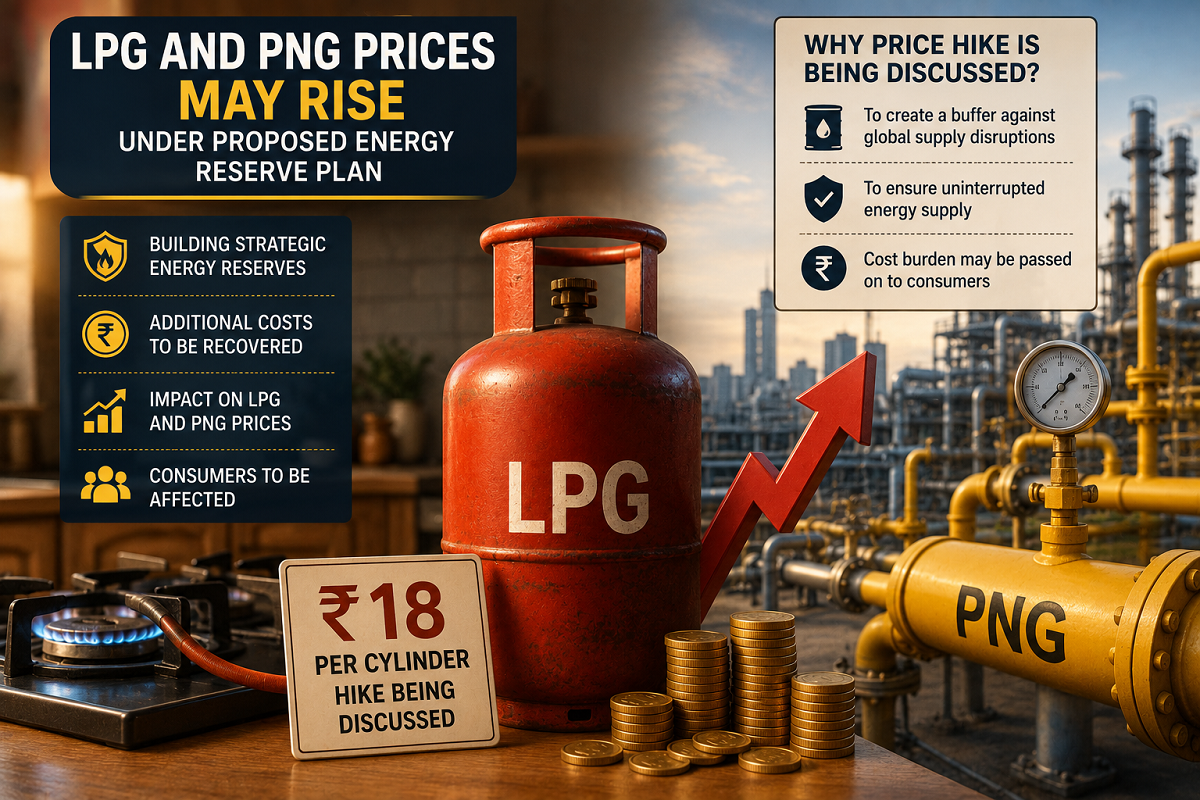
The Central Government is reportedly considering a proposal that could introduce a new levy on LPG and piped natural gas (PNG) to help build a strategic fuel reserve for the country. If the proposal is approved, the price of a standard 14.2 kg domestic LPG cylinder could increase by around ₹18.
The proposal is still under consideration and has not yet received Cabinet approval. Therefore, no additional charge has been implemented at this stage.
Government Planning Strategic Fuel Reserve
According to reports, the government is working on a long-term strategy to strengthen India's energy security by creating a Strategic Fuel Reserve.
The proposed project is estimated to involve an investment of nearly $42 billion (approximately ₹3.7 lakh crore). Unlike existing strategic crude oil reserves, the new plan reportedly aims to include LPG and liquefied natural gas (LNG) storage facilities as well.
The objective is to improve India's preparedness for future supply disruptions and ensure adequate fuel availability during emergencies.
Why Is a New Levy Being Considered?
To finance the development of this large-scale storage infrastructure, the government is reportedly evaluating the possibility of imposing a small levy on LPG and PNG consumers.
Under the proposal:
-
A levy of ₹1.29 per kilogram may be imposed on LPG.
-
A charge of ₹1.43 per standard cubic metre (SCM) may be considered for PNG.
These funds would be used to create and maintain strategic gas storage facilities across the country.
However, the proposal remains at the discussion stage, and no final decision has been announced.
How Much Could LPG Cylinder Prices Increase?
If the proposed LPG levy is implemented in its current form, the cost of a 14.2 kg domestic LPG cylinder could increase by approximately ₹18.
This calculation is based on the proposed levy of ₹1.29 per kilogram.
At present, this is only an estimate based on the proposal, and consumers are not required to pay any additional charge unless the government formally approves and notifies the new levy.
Why Does India Want a Strategic Gas Reserve?
India imports a significant portion of its crude oil and natural gas requirements.
Recent geopolitical tensions and disruptions in global energy supply chains have highlighted the importance of maintaining emergency fuel reserves. Events such as conflicts in the Middle East, shipping disruptions, or sudden spikes in international energy prices can affect fuel availability and increase import costs.
By building strategic reserves for LPG and LNG, the government aims to reduce the country's vulnerability during periods of global uncertainty.
How Will the Money Be Used?
According to the proposal, revenue generated through the new levy would be invested in:
-
Developing strategic LPG and LNG storage facilities.
-
Expanding gas reserve infrastructure.
-
Strengthening India's long-term energy security.
-
Improving the country's ability to manage supply disruptions.
Government estimates suggest the levy could generate approximately $1.5 billion annually, which would be directed toward the proposed infrastructure.
Proposal Still Awaiting Approval
It is important to note that the proposed levy has not yet been approved by the Union Cabinet.
Until the government officially clears the proposal and issues a formal notification, there will be no change in the prices of LPG cylinders or PNG based on this plan.
Consumers should therefore treat the reported ₹18 increase as a proposed estimate, not an immediate price revision.
What Consumers Should Know
If approved in the future, the proposal could result in a modest increase in LPG and PNG costs while supporting the creation of a national strategic gas reserve.
For now:
-
No additional LPG or PNG levy has been implemented.
-
Domestic LPG prices remain unchanged unless officially revised.
-
The proposal is still awaiting government approval.
-
Any future change in fuel prices will be announced through an official government notification.
Consumers are advised to rely on official announcements rather than speculation regarding future LPG price revisions until a final decision is taken.