BUSINESS
India’s ₹23 Lakh Crore Import Crisis: PM Modi Calls for a ‘National Resolution’ to Slash Bills
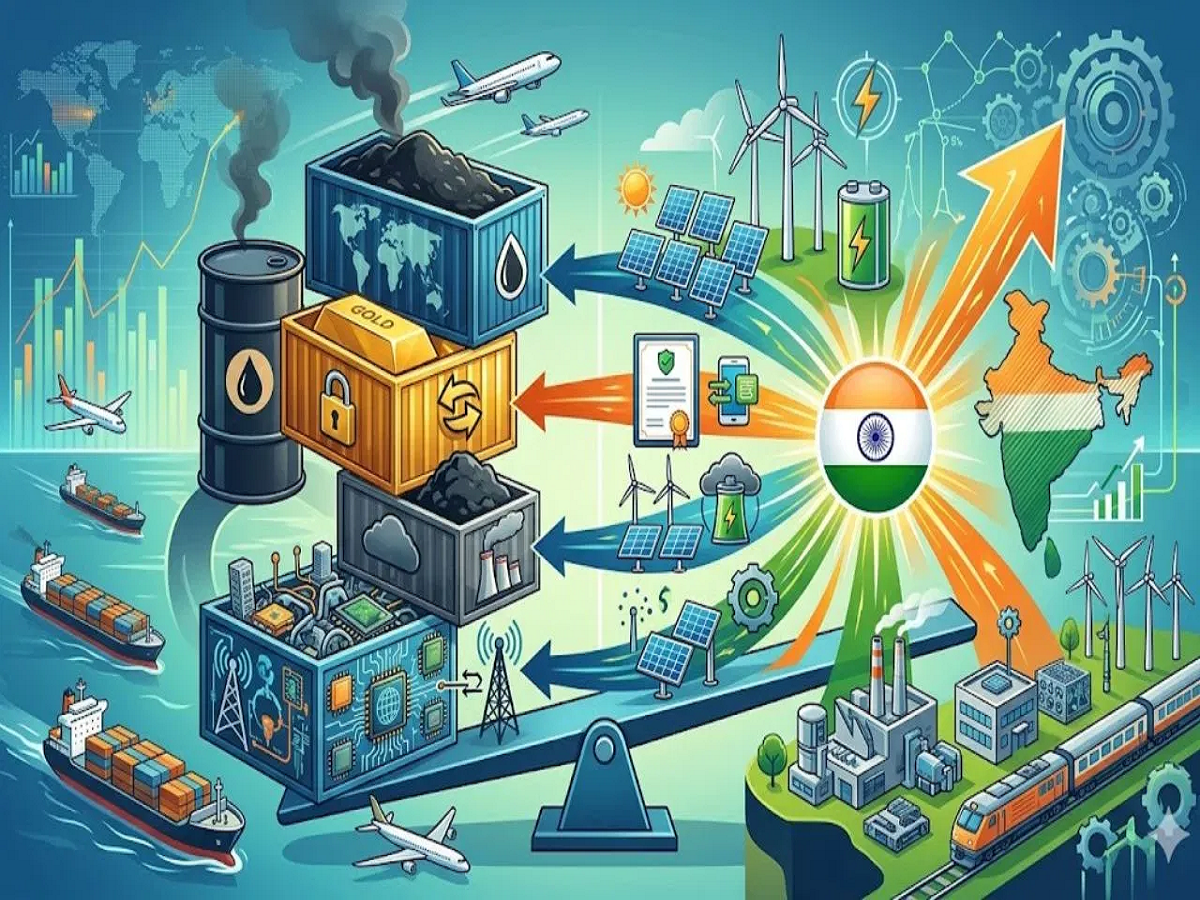
In a major push for economic self-reliance, Prime Minister Narendra Modi has issued a strategic appeal to the nation to curb the consumption of four major commodities that are draining India’s foreign exchange. In FY2026, India’s import bill for just four categories—crude oil, gold, vegetable oil, and fertilizers—skyrocketed to a staggering $240.7 billion (approx. ₹23 lakh crore), accounting for nearly one-third of the country's total imports.
The "Big Four" Draining the Exchequer
The sheer scale of these imports has put immense pressure on India's external accounts, especially amidst the ongoing West Asian crisis.
| Commodity | FY2026 Import Value | Key Concern |
| Crude Petroleum | $134.7 Billion | Largest share (17.4% of total imports) |
| Gold | $72.0 Billion | Record high; grew 24% in one year |
| Vegetable Oil | $19.5 Billion | Significant impact on household spending |
| Fertilizers | $14.5 Billion | Massive 77% surge in costs |
PM Modi’s "Surgical Strike" Strategy: A Call to Action
Addressing a rally in Hyderabad on May 10, the Prime Minister urged citizens to adopt a "Country First" mindset by making small but impactful lifestyle changes:
-
Energy Revolution: Shift to electric vehicles (EVs), utilize public transport, and move freight from roads to railways.
-
Solar Farming: Farmers are encouraged to replace diesel pumps with solar-powered alternatives and slash chemical fertilizer use by 50%.
-
Household Prudence: Families have been asked to reduce cooking oil consumption and, notably, to postpone non-essential gold purchases for at least one year.
The Global Context: Why Now?
The urgency of this appeal stems from volatile global markets. In May 2026, India’s crude oil basket averaged $105.4 per barrel, a sharp rise that threatens economic stability. Furthermore, many of these raw materials pass through the Strait of Hormuz, a geopolitical flashpoint that adds "risk premiums" to the cost of organic chemicals and fertilizers.
The Economic Impact of a "Behavioral Shift"
The data shows that between FY2021 and FY2026, the cost of these four items more than doubled from $112 billion to over $240 billion.
"Even small changes in behavior can have a significant impact... as these four commodities account for one out of every three dollars spent on imports."
The Bottom Line: By reducing dependence on these imports, India aims to shield its economy from global price shocks and strengthen its foreign exchange reserves. PM Modi’s message is clear: Economic independence is no longer just a policy goal—it’s a national resolution.