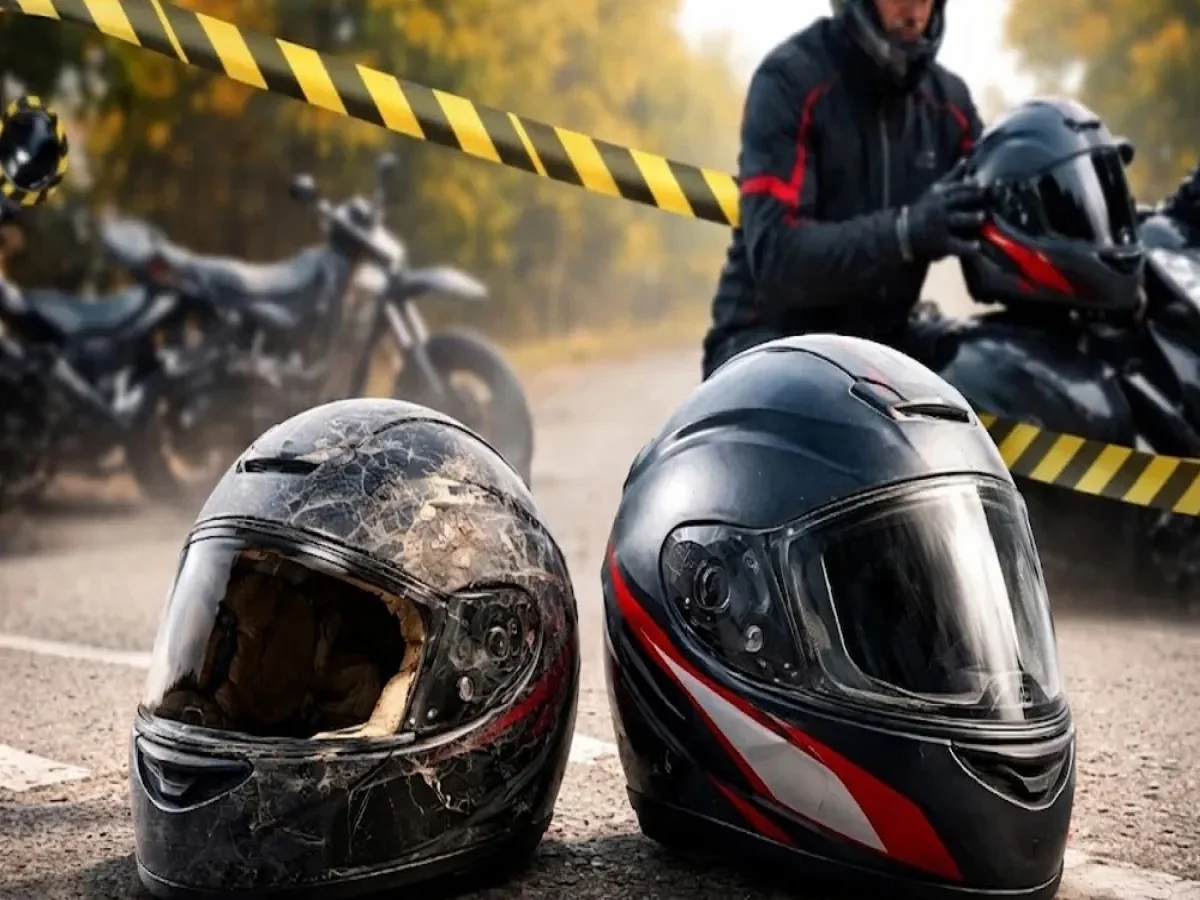
Wearing a helmet while riding a two-wheeler in India is not just a legal requirement—it is one of the most critical safety measures that can save your life. A good helmet protects your head from severe injuries during accidents. However, many riders overlook an important fact: helmets do not last forever.
Over time, a helmet’s strength and protective ability decline, making it less effective. Here’s a complete, easy-to-understand guide on when you should replace your helmet and the warning signs you should never ignore.
⏳ Helmet Lifespan: How Long Does It Last?
Most experts recommend replacing your helmet within:
- 5 years from the manufacturing date
- 3 years if used frequently or in harsh conditions
Even if the helmet looks fine externally, internal materials can degrade over time.
Replace Immediately After an Accident
If your helmet has been involved in a crash:
- Replace it immediately
- Even if there are no visible cracks
The inner protective layer may be damaged, reducing its ability to absorb impact in future accidents.
🪶 Loose Fit or Worn-Out Padding
A helmet should fit snugly on your head.
Watch out for:
- Compressed or worn-out inner padding
- Loose or unstable fitting
If the helmet no longer fits properly, it cannot provide adequate protection.
👁️ Poor Visibility Due to Damaged Visor
A scratched or damaged visor can reduce visibility, especially at night.
- Blurred vision increases accident risk
- Replace visor or helmet if damage is severe
🧱 Damage to Inner Foam Layer
The inner foam (EPS layer) is crucial for absorbing impact.
Replace the helmet if:
- Foam has hardened
- Cracks are visible
- Pieces are breaking off
🔗 Strap and Buckle Issues
A helmet is only effective if it stays securely in place.
Check for:
- Worn-out straps
- Faulty or loose buckles
If it doesn’t fasten properly, it may fail during a crash.
🪨 Cracks or Dents on Outer Shell
Even small external damage can weaken the helmet structure.
- Cracks or dents reduce impact resistance
- Never ignore visible damage
inal Takeaway
Your helmet is your first line of defense on the road, but only if it’s in good condition. Replacing it on time and checking for signs of wear can make a life-saving difference.
Don’t wait for visible damage—regular inspection and timely replacement are essential for staying safe while riding.