BUSINESS
GOBARdhan Scheme 2026: How India Plans to Turn Cattle Dung and Farm Waste into Clean Fuel and Rural Income
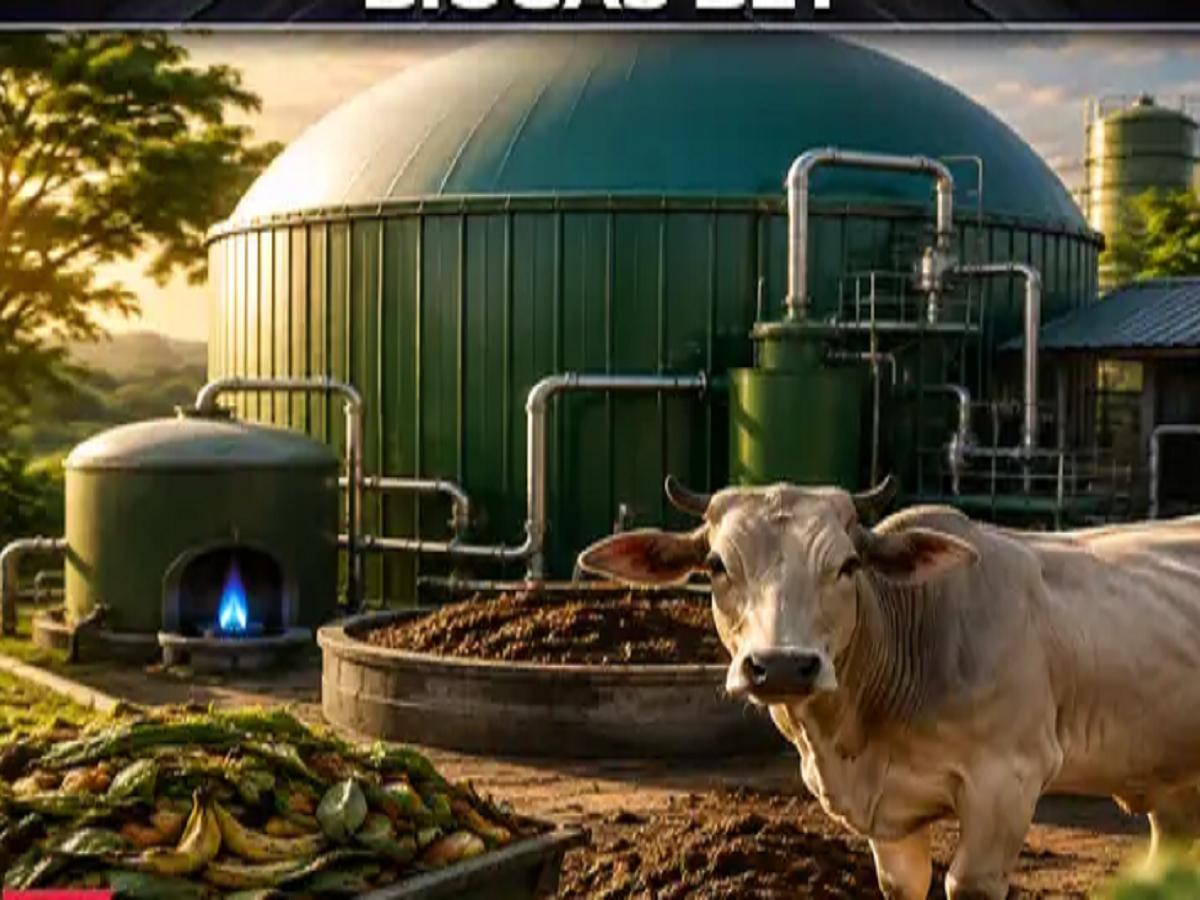
What if cattle dung, crop residue and organic waste could become valuable resources instead of being discarded? The Government of India is working towards this through the GOBARdhan scheme, a national initiative designed to convert organic waste into compressed biogas, organic fertiliser and new business opportunities.
On 1 October 2026, the Ministry of Petroleum and Natural Gas formally launched the scheme under a unified framework for developing India’s compressed biogas sector. The initiative was approved by the Union Cabinet in August with a total outlay of ₹23,731 crore for the financial years 2026–27 to 2035–36. <Cite refs={["turn743949search0","turn743949search1"]}/>
What Is the GOBARdhan Scheme?
GOBARdhan stands for Galvanizing Organic Bio-Agro Resources Dhan. Its purpose is to encourage the productive use of organic waste generated by farms, livestock, households, markets and municipalities.
The new framework focuses on compressed biogas (CBG), a renewable fuel produced by processing biodegradable materials. Once purified and compressed, CBG can be used as a fuel and supplied into suitable gas-distribution systems.
The scheme aims to increase domestic compressed biogas production nearly tenfold, strengthen energy security and create opportunities for farmers, cooperatives, micro, small and medium enterprises (MSMEs) and rural entrepreneurs. <Cite refs={["turn743949search1","turn743949search2"]}/>
What Benefits Does the Scheme Offer?
The scheme brings several forms of support together under one national framework.
-
Financial assistance: Eligible new compressed biogas projects may receive capital assistance of up to ₹2 crore per tonne per day of installed capacity, subject to scheme conditions.
-
More predictable demand: A dedicated framework is intended to improve certainty around the purchase of compressed biogas.
-
Stable pricing: The scheme introduces an administered pricing framework intended to improve revenue predictability for producers.
-
Better access to finance: Eligible MSME-based projects may benefit from credit-guarantee support covering up to 85% of eligible loans.
-
Improved infrastructure: Support for pipeline connections can help plants transport gas to markets more efficiently. <Cite refs={["turn743949search2","turn743949search5"]}/>
These benefits are intended for eligible projects and businesses. They are not a direct cash subsidy available automatically to every farmer or household.
How Can Farmers Benefit?
Farmers can potentially benefit by supplying cattle dung, crop residue and other suitable organic material to biogas projects. Such arrangements can create an additional market for agricultural by-products that might otherwise be underused or discarded.
The production process can also generate organic manure, which may provide value for agricultural use when processed and applied appropriately.
However, actual earnings depend on factors such as the quantity and quality of available waste, collection costs, transportation, local demand and the commercial arrangements agreed with a plant operator.
Can Small Businesses Set Up a Biogas Plant?
The scheme is designed to encourage private investment and participation by MSMEs, cooperatives and rural entrepreneurs. However, establishing a compressed biogas plant requires more than access to organic waste.
Potential operators need to assess land availability, feedstock supply, technology, environmental approvals, financing, gas transportation and long-term buyers before investing.
The government has also introduced a Unified GOBARdhan Portal to support registration and implementation. Businesses intending to establish or operate a compressed biogas plant can check the official portal for registration requirements and the process for accessing eligible scheme support. <Cite refs={["turn743949search0","turn743949search2"]}/>
How Does the Scheme Help the Environment?
Organic waste that is poorly managed can create sanitation problems and release methane as it decomposes. Processing suitable waste in controlled biogas facilities can help capture methane for energy production while producing useful by-products.
The scheme also aims to reduce dependence on imported fossil fuels by increasing domestic production of renewable gaseous fuel. Its long-term success will depend on reliable waste collection, effective plant operations and the responsible management of the resulting organic manure.
Where Can You Check the Official Details?
People interested in the scheme should use official government resources rather than relying on unverified claims of guaranteed funding.
-
GOBARdhan registration portal: https://gobardhan.eil.co.in/
-
Ministry of Petroleum and Natural Gas: https://mopng.gov.in/
-
Press Information Bureau: https://www.pib.gov.in/
Before investing, applicants should confirm the current eligibility rules, required documents, financial-assistance limits and approval process.
The Bigger Picture
The GOBARdhan scheme reflects an effort to connect waste management, clean energy and rural enterprise within a single framework. By creating stronger markets for compressed biogas and organic waste, it could open up new commercial opportunities across the agricultural and energy sectors.
For farmers and entrepreneurs, the practical lesson is to explore local feedstock availability, potential buyers and official eligibility requirements before making financial commitments. Turning waste into a resource can create value, but successful projects depend on careful planning and viable business operations.