BUSINESS
FD or Gold: Which Is Better for Building an Emergency Fund? Here's What Financial Experts Suggest
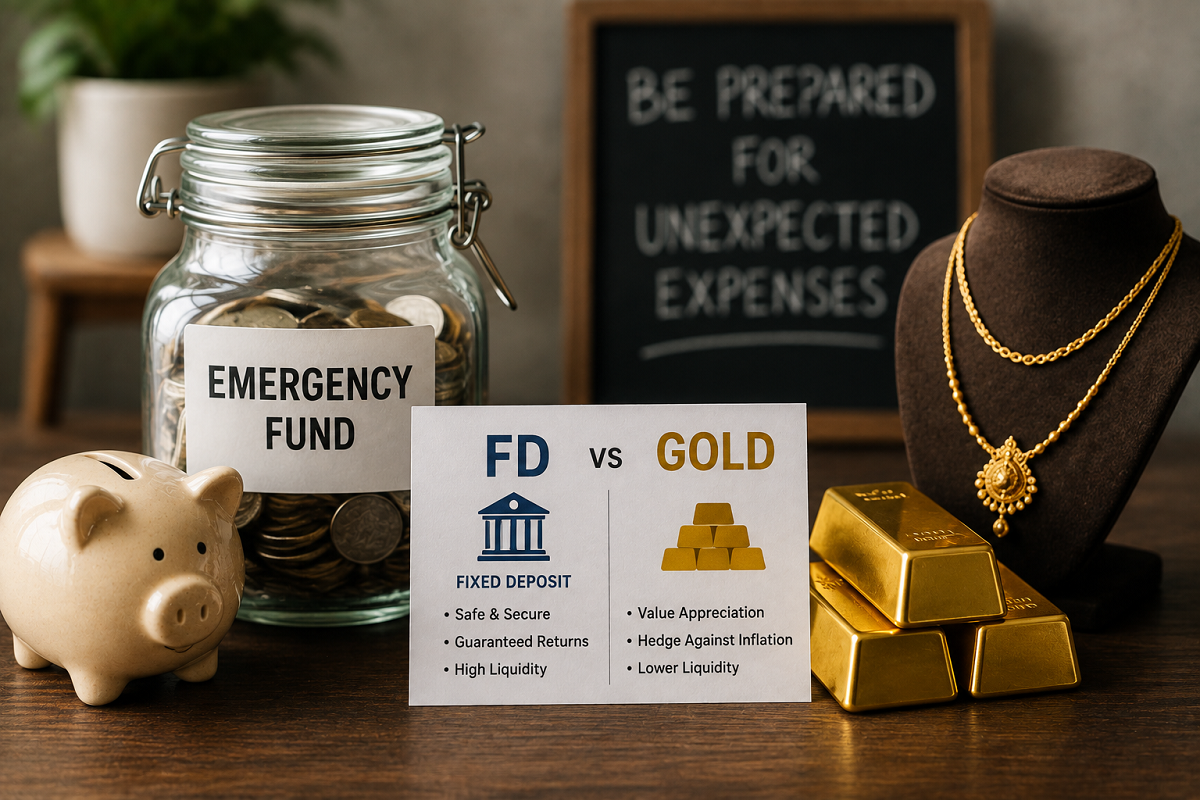
An emergency fund is one of the most important components of a sound financial plan. Whether it's an unexpected medical expense, job loss, urgent home repairs, or any other financial emergency, having readily available savings can help you manage difficult situations without relying on loans or high-interest credit.
Many people, however, are unsure where to keep this money. Should an emergency fund be invested in a Fixed Deposit (FD) or gold? The answer depends on three key factors—liquidity, safety, and accessibility.
Here's a closer look at both options and how to build an effective emergency fund.
Why Is an Emergency Fund Important?
Life is unpredictable, and unexpected expenses can arise without warning.
An emergency fund acts as a financial cushion, helping you cover essential expenses without disturbing your long-term investments or borrowing money during a crisis.
Unlike wealth-building investments, an emergency fund is meant to provide quick access to cash whenever required.
How Much Should Your Emergency Fund Be?
Financial planners generally recommend maintaining an emergency fund equal to at least six months of essential living expenses.
These expenses typically include:
-
House rent
-
Grocery bills
-
Electricity and utility payments
-
Loan EMIs
-
Insurance premiums
-
Other essential household expenses
If you are the sole earning member of your family or work in a profession with uncertain income, maintaining nine to twelve months' worth of expenses may provide better financial security.
Is Fixed Deposit a Better Choice?
For many investors, Fixed Deposits (FDs) remain one of the safest options for emergency savings.
Advantages of Keeping Emergency Funds in FD
-
Capital remains relatively stable and is not directly affected by stock market fluctuations.
-
Money can usually be accessed by breaking the FD in case of an emergency.
-
Interest continues to accrue on the deposited amount until withdrawal, subject to the applicable terms.
Financial planners often recommend creating multiple small FDs or using an auto-sweep FD instead of one large deposit. This allows you to withdraw only the amount you need while the remaining balance continues earning interest.
However, premature withdrawal from an FD may reduce the interest earned or attract penalties, depending on the bank's terms.
Is Gold Suitable for an Emergency Fund?
Gold is widely regarded as a long-term investment and a hedge against inflation, but it may not always be the ideal place to keep an emergency fund.
Limitations of Using Gold
-
Gold prices fluctuate based on market conditions.
-
You may have to sell gold when prices are temporarily lower.
-
Converting physical gold into cash can sometimes take time.
-
Depending on the form of gold and the buyer, deductions or transaction costs may apply.
Although gold can provide long-term value, it may not offer the immediate liquidity that an emergency fund requires.
A Better Way to Manage Your Emergency Savings
Instead of relying on a single investment option, many financial planners recommend dividing emergency savings across different instruments.
One possible approach could be:
-
Keep 30%–40% of the emergency fund in a savings account or an auto-sweep FD for immediate access.
-
Invest the remaining 60%–70% in relatively liquid and lower-risk options such as short-term fixed deposits or liquid mutual funds.
This approach aims to balance accessibility with the potential to earn returns, while keeping funds available for unexpected situations.
Investments That May Not Be Suitable for Emergency Funds
Since the primary purpose of an emergency fund is quick access to money rather than high returns, experts generally advise against keeping emergency savings in assets that are difficult to liquidate or highly volatile.
These may include:
-
Equity shares
-
Real estate
-
Investments with lock-in periods
-
Long-term financial products that cannot be redeemed quickly
If an emergency arises, selling these assets may take time or force investors to exit at an unfavorable price.
What Should Be Your Priority?
When building an emergency fund, liquidity and safety are generally more important than maximizing returns.
While gold remains a valuable long-term investment for portfolio diversification, it may not always be the most practical choice for meeting urgent financial needs. Instruments such as savings accounts, auto-sweep fixed deposits, short-term FDs, or liquid mutual funds are typically considered more suitable because they provide easier access to funds when required.
Before deciding where to keep your emergency savings, evaluate factors such as accessibility, potential penalties for withdrawal, risk level, and your overall financial situation.
Disclaimer: This article is intended for informational purposes only and should not be treated as financial or investment advice. Investment decisions should be based on individual financial goals, risk tolerance, and consultation with a qualified financial advisor.