BUSINESS
Edible Oil Prices Surge Again: Refined and Mustard Oil Become Costlier Amid West Asia Tensions
The rising cost of kitchen essentials has delivered another blow to household budgets across India. Prices of edible oils, including refined oil and mustard oil, have jumped sharply over the past few weeks as tensions in West Asia continue to disrupt global supply chains. Traders warn that if the situation in Gulf countries worsens further, the impact could soon spread beyond cooking oils and dry fruits to sweets, snacks, restaurants, and several other food-related industries.
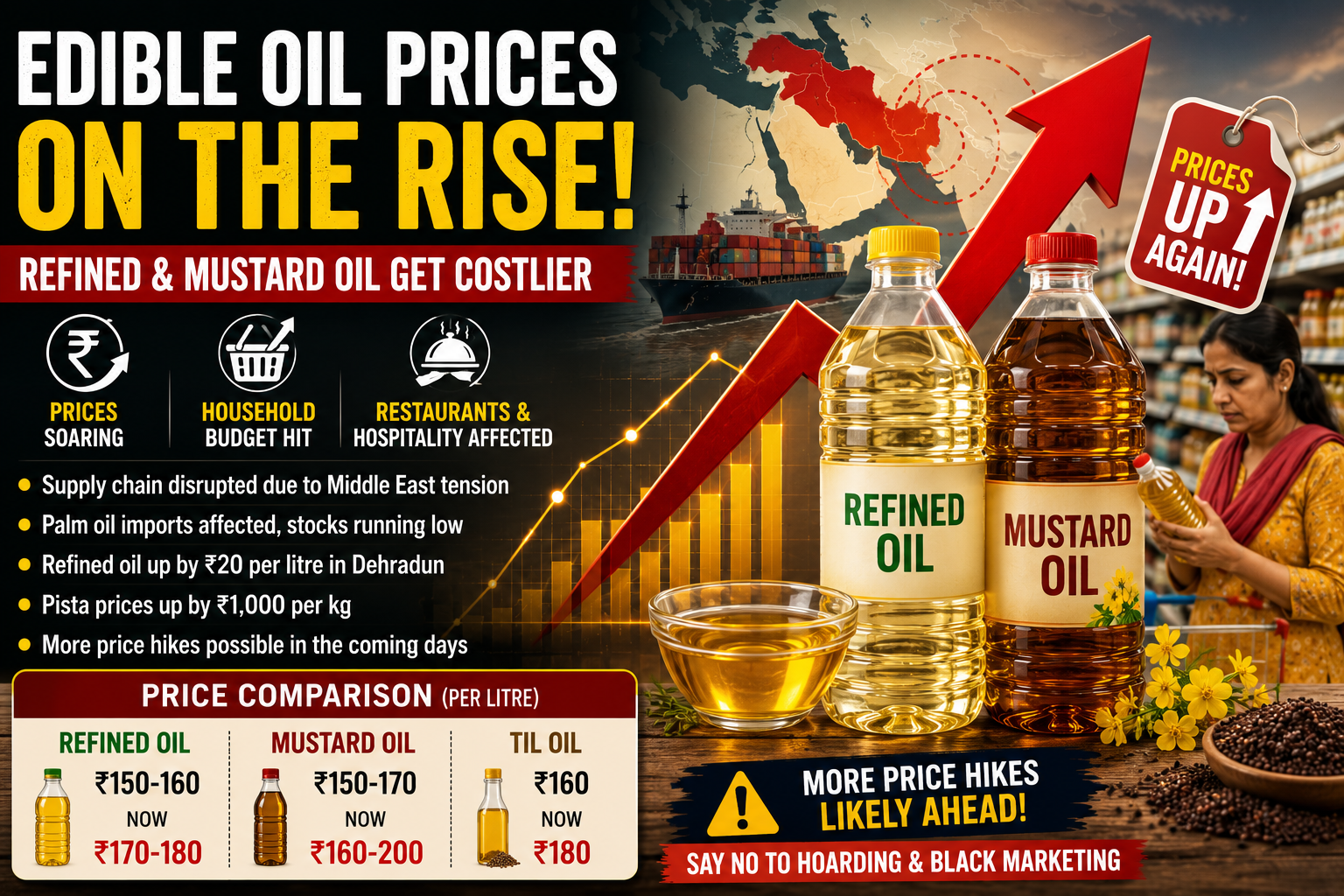
Consumers in many cities are already feeling the pressure of inflation. In Dehradun, the price of refined cooking oil has reportedly increased by nearly ₹20 per litre, while imported pistachios from Iran have become costlier by as much as ₹1,000 per kilogram. Market experts believe the current trend may continue if international trade routes remain unstable.
Supply Chain Disruptions Trigger Price Hike
Industry experts say the main reason behind the sudden rise in prices is the disruption in supply from Gulf nations and nearby regions. India depends heavily on imported edible oils, especially palm oil, which arrives through international trade routes connected to West Asia.
Due to geopolitical tensions and fears of prolonged conflict in the region, shipments have slowed down considerably over the last two months. Earlier stock available with wholesalers and distributors has nearly exhausted, and fresh imports are now arriving at significantly higher prices. This increase is directly affecting retail markets across the country.
Just a few months ago, popular branded refined oils were selling between ₹150 and ₹160 per litre. Now, the same products are being sold at prices ranging from ₹170 to ₹180 per litre in several local markets.
Households are struggling to adjust to these higher rates, especially at a time when LPG, vegetables, and other daily-use items are already expensive. The impact is also being felt by restaurants, hotels, and food businesses that depend heavily on edible oil for daily operations.
Mustard Oil Prices Also Climb Sharply
The price rise is not limited to refined oil alone. Mustard oil, which is commonly used in many Indian households, has also become significantly more expensive.
According to local traders, different varieties of mustard oil that were earlier available between ₹150 and ₹170 per litre are now being sold at prices touching ₹200 per litre in some markets.
Similarly:
- Refined oil prices have climbed from around ₹140 to nearly ₹150 per litre.
- Sesame oil prices have increased from approximately ₹160 to ₹180 per litre.
Traders believe the situation could worsen further if international tensions continue for a longer period.
Dry Fruits Also Becoming Expensive
The inflationary pressure is now extending beyond edible oils. Pistachios imported from Iran have witnessed a major price surge because of lower supply and transportation difficulties.
Market reports suggest that pistachio prices have risen by nearly ₹1,000 per kilogram and are currently selling at around ₹3,400 per kilogram in retail markets.
Business owners dealing in imported dry fruits say the shortage is likely to continue until global trade conditions improve.
Food Industry Could Face Bigger Challenges
Experts warn that the current increase in edible oil prices could eventually affect the overall food industry. Since cooking oil is used extensively in restaurants, sweet shops, bakeries, packaged snacks, and fast-food chains, businesses may soon increase menu prices to offset rising costs.
Consumers may therefore have to spend more on eating out, processed food products, and festive sweets in the coming months.
Retailers in Uttarakhand and other states say edible oil prices have risen by nearly ₹20 to ₹30 per litre within just one week. This sudden jump has created panic among small shopkeepers and consumers alike.
Authorities on Alert Against Hoarding
As fears of artificial shortages increase, district supply departments have started monitoring the market more closely. Officials have issued strict instructions to prevent hoarding and black marketing of edible oils.
District Supply Officer KK Agrawal has reportedly directed regional supply inspectors to remain alert and take immediate action against traders found creating fake shortages or manipulating prices.
Authorities believe strict monitoring will help prevent panic buying and ensure a smoother supply of essential food products.
Inflation Concerns Continue to Grow
Economists believe global geopolitical tensions are once again proving how strongly international events influence everyday household expenses in India. Since the country relies heavily on imports for several edible oils, disruptions in shipping routes or crude oil markets quickly affect retail prices.
If conditions in West Asia stabilize soon, prices may gradually ease. However, if the crisis deepens further, Indian consumers may continue to face rising food inflation in the months ahead.
For now, households, traders, and food businesses are all keeping a close watch on international developments while trying to manage the growing burden of expensive kitchen essentials.