Indoor plants do much more than decorate balconies and living rooms. They create a refreshing atmosphere, improve indoor aesthetics, and often help people feel calmer and more relaxed. But many plant lovers face the same frustrating problem — a healthy-looking indoor plant suddenly starts turning yellow, drooping, drying out, or losing leaves.
In many cases, people assume the plant is beyond saving and throw it away. However, gardening experts say even severely damaged indoor plants can often recover if the right care methods are applied at the right time.
Here are some effective and beginner-friendly tips that can help revive struggling indoor plants and restore their healthy growth.
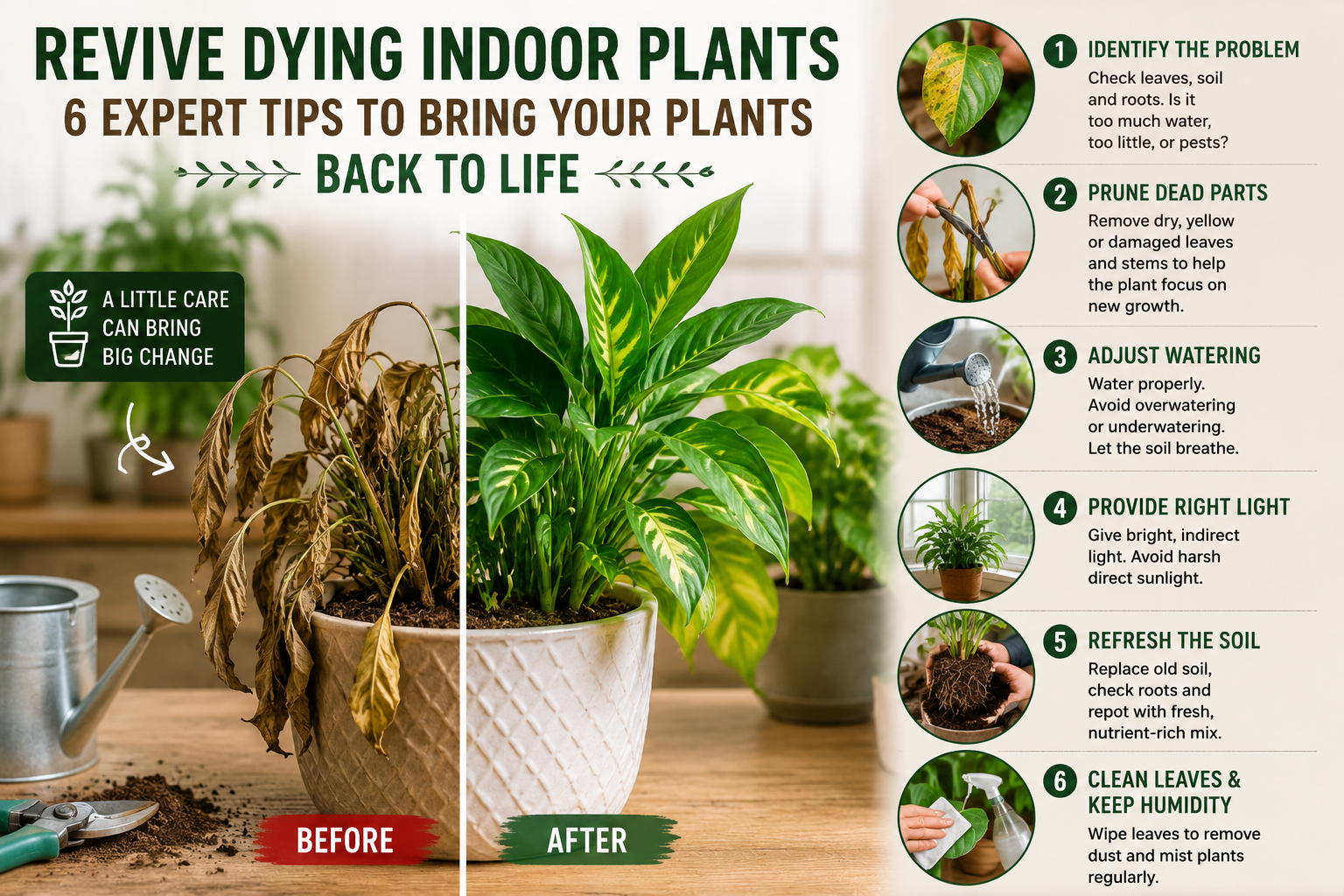
1. Identify the Real Problem First
Before trying to save a plant, it is important to understand what is actually causing the damage.
Experts recommend carefully observing:
- Leaf colour
- Soil condition
- Stem texture
- Growth pattern
- Moisture level
Signs of Overwatering
If leaves are turning yellow and falling off while the soil remains constantly wet or muddy, the plant may be suffering from overwatering.
Signs of Underwatering
If leaves appear dry, crispy, brown, or curled and the soil is pulling away from the sides of the pot, the plant likely needs water urgently.
Correct diagnosis is often the most important step in saving a dying plant.
2. Remove Dead Leaves and Damaged Branches
One of the fastest ways to help a weak plant recover is proper pruning.
Gardeners suggest removing:
- Completely dry leaves
- Brown or damaged foliage
- Dead stems and branches
This helps the plant stop wasting nutrients and energy on parts that can no longer recover.
Instead, the plant can focus its energy on:
- Growing fresh leaves
- Strengthening roots
- Developing healthy new shoots
Experts recommend always using clean and sharp scissors or pruning tools to avoid infections.
3. Adjust Watering Habits Immediately
Watering mistakes are among the most common reasons indoor plants start dying.
If the Plant Is Too Dry
Give the plant deep hydration instead of light surface watering.
One effective method is to place the pot inside a bucket or tray filled with water for a short time so the roots can absorb moisture from below.
If the Plant Has Too Much Water
Stop watering immediately and move the plant to a location with better airflow.
Experts advise waiting until the top two inches of soil become dry before watering again.
Good drainage is equally important because waterlogged soil can quickly damage roots.
4. Maintain Proper Light Conditions
Different indoor plants need different levels of sunlight.
Signs of Insufficient Light
If the plant looks weak, stretched, pale, or produces smaller leaves, it may not be getting enough light.
In such cases, moving the plant near a bright window with indirect sunlight may help.
Signs of Excessive Sunlight
If leaves develop dark patches, burn marks, or dry edges, the plant may be suffering from excessive direct sunlight.
The solution is to move it to a shaded or semi-shaded area immediately.
Experts say balancing sunlight exposure is essential for healthy indoor plant growth.
5. Replace Old Soil and Check the Roots
Sometimes the real issue lies beneath the surface.
Over time:
- Soil loses nutrients
- Drainage quality declines
- Roots become overcrowded
- Root rot may develop
To revive the plant, experts suggest gently removing it from the old pot and inspecting the roots carefully.
Warning Signs of Root Rot
If roots appear:
- Black
- Soft
- Mushy
- Sticky
the damaged portions should be trimmed away immediately.
The plant should then be repotted in:
- Fresh nutrient-rich soil
- Cocopeat mix
- Organic compost
- A pot with proper drainage holes
This gives the plant a healthier growing environment.
6. Clean Dust From Leaves
Indoor plants often collect dust quickly, especially in urban homes.
Dust blocks sunlight absorption and reduces the plant’s ability to perform photosynthesis properly.
Experts recommend:
- Wiping leaves gently with a soft damp cloth once a week
- Occasionally misting plants lightly to maintain humidity
This can improve leaf health and overall plant recovery.
Patience Is Important
One of the biggest mistakes plant owners make is expecting instant recovery.
Plants usually need:
- Several days
- Or even a few weeks
to adapt to improved conditions and begin showing healthy new growth.
Gardening experts say consistency is key. With proper care, watering balance, clean soil, and correct light exposure, many indoor plants that appear nearly dead can gradually return to healthy condition.
For plant lovers, a little patience and regular attention can often make the difference between losing a plant and bringing it back to life.