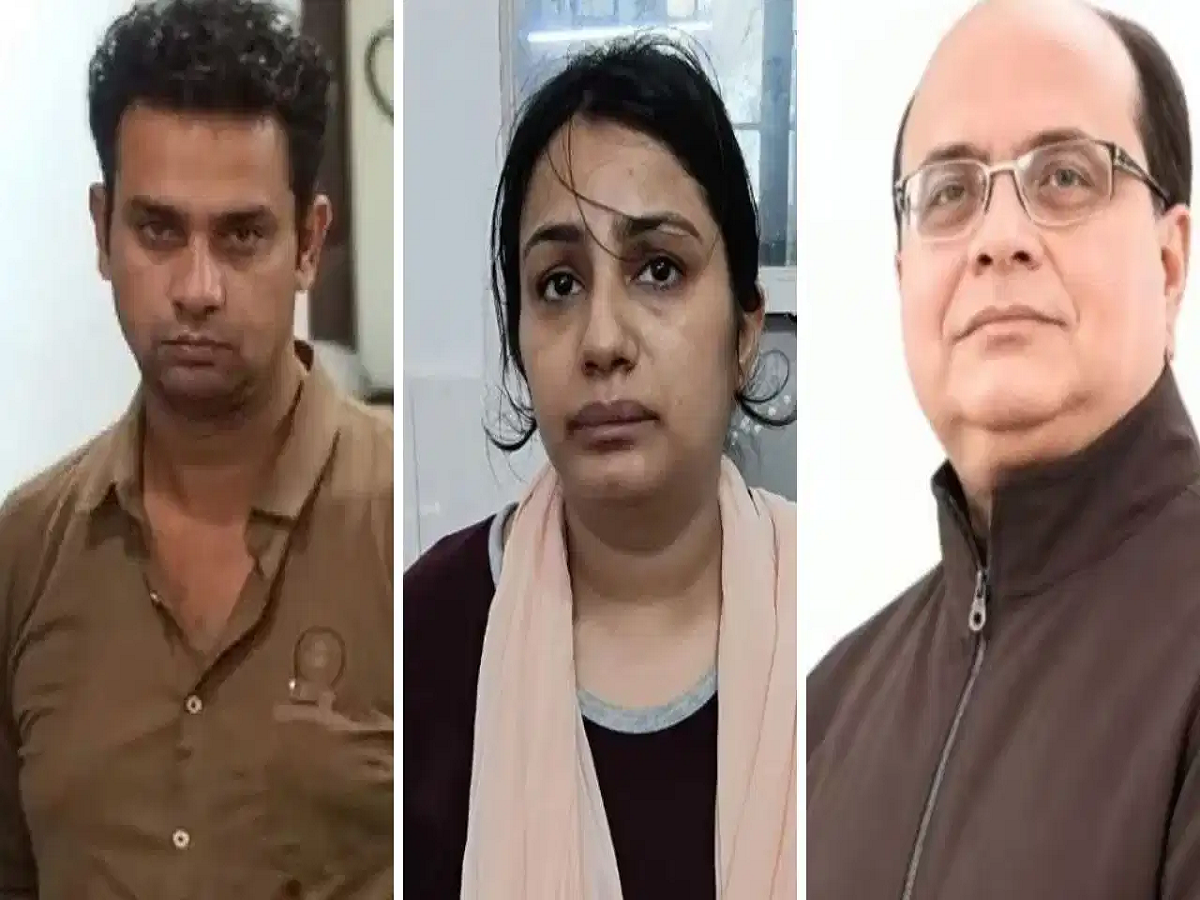
The Supreme Court has taken a tough stance on the issue of digital arrests, prohibiting courts from releasing accused on bail. This decision came in the case of a 72-year-old female lawyer who was digitally arrested and defrauded of ₹3.29 crore. The court stated that extraordinary events require extraordinary intervention. It also noted that fraudsters are targeting unsuspecting elderly people and siphoning off their life savings.
In an unprecedented move regarding digital arrests, the Supreme Court has barred courts from granting bail to those accused of digitally arresting a 72-year-old female lawyer and forcing her to transfer ₹3.29 crore. The apex court ordered that no court will grant release to accused Vijay Khanna and his co-accused.
If the accused require any relief, they can approach the Supreme Court. The court stated that extraordinary events require extraordinary intervention. A bench of Justices Surya Kant and Joymalya Bagchi issued this order during a suo motu hearing into a case of digital arrest, following the raising of the issue of an elderly female lawyer being duped through digital arrest.
"Unusual events require extraordinary interventions."
Justice Surya Kant, who headed the bench, said that while he was not against anyone's life and liberty, this case required an extraordinary order. Such cases should be dealt with firmly to send the right message. The bench added that extraordinary events require extraordinary intervention.
The court issued the order after hearing an intervention petition filed by the Supreme Court Advocates on Record Association (SCAORA), which raised the issue of fraud against an elderly female lawyer and demanded strict action against the perpetrators. Vipin Nair, president of the association, informed the court that the elderly female lawyer had lost her life savings. The accused arrested after the FIR was filed in the incident will be released on statutory bail.
When is bail granted legally?
It should be noted that when an accused is arrested and a charge sheet is not filed against him in court within the statutory period, he is granted bail. This very issue was raised in this case. The court, taking cognizance of Nair's arguments, immediately issued an order stating that no court will release Vijay Khanna and the other accused in this case on bail.
The bench said that if the accused seek any relief, they can approach the Supreme Court. Vipin Nair informed the court that in this case, the police were in a position to recover ₹4.2 million from the accused, but there is a procedural void in such cases. Despite a magistrate's order to deposit the money into the victim's account, the bank refused to accept it. The bench responded that nationwide guidelines will soon be issued. Await the next date.
Thugs are targeting unsuspecting elderly people
Solicitor General Tushar Mehta also supported Nair's arguments. Mehta said that he had spoken to the victim, an elderly woman, and learned that the scammers had so duped her into breaking her fixed deposits and handing over the money. Vipin Nair said that the fraudsters are targeting not young people but unsuspecting elderly people, siphoning off their life savings. The court said, "Don't worry, we will do something. Instructions are needed in this regard."
The court also told N.S. Nappinai, the amicus curiae appointed in the case, that it would soon ask him to publish an advertisement urging victims of such crimes to contact him, so that the extent of the crime could be ascertained. During the hearing, a lawyer informed the court that India had not ratified the United Nations Convention on Cybercrime. The bench then asked the Solicitor General to consider the matter. The court will hear the case again on Monday, November 24th.
In digital arrest, criminals digitally restrict people by threatening them with the courts and investigative agencies and then force them to transfer money. The court has taken suo motu cognizance of a letter from a victim couple from Haryana and has initiated a hearing. In this case, the court issued notices to Haryana, the central government, and the CBI. At the last hearing, the court also expressed its desire to transfer all digital arrest cases to the CBI.
PC:Jagran