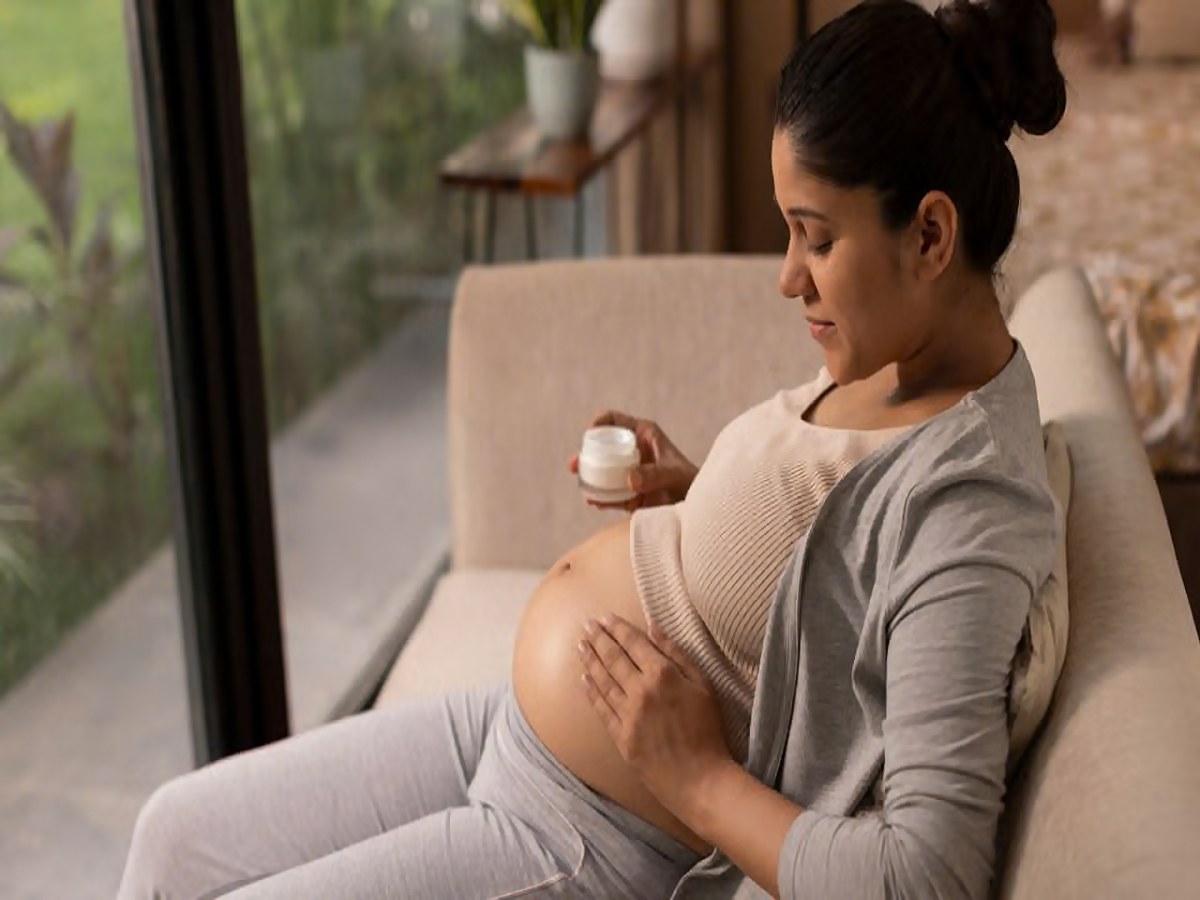
Pregnancy brings numerous physical changes, and stretch marks are among the most common. These lines often appear on the abdomen, breasts, hips and thighs as the body changes. While they are completely natural and harmless, many people look for ways to make them less noticeable.
One popular remedy is vitamin E oil, which is widely promoted for moisturising the skin and improving the appearance of scars and stretch marks. Products such as Bio-Oil are also commonly used for this purpose.
But can vitamin E oil actually remove stretch marks, or does it simply keep the skin moisturised? Dermatologists explain what you should know before spending money on these products.
What Does a Dermatologist Say About Vitamin E Oil?
Dr. Sandeep Arora, Senior Consultant in Dermatology at Apollo Spectra Hospital, Delhi, explains that vitamin E oil is frequently used for stretch marks, but there is insufficient scientific evidence to establish it as an effective standalone treatment.
Vitamin E is an antioxidant that helps protect cells from oxidative damage. When applied to the skin, it can also help improve moisturisation, depending on the formulation.
However, stretch marks develop when the deeper layers of the skin undergo changes involving collagen and elastin, the structural proteins that help maintain skin strength and elasticity.
Because these changes occur beneath the skin's surface, simply applying an oil cannot reliably reverse them.
Why Do Stretch Marks Develop?
Stretch marks, medically known as striae, develop when the skin undergoes rapid changes that affect its supporting structures.
Several factors can contribute to their appearance:
-
Pregnancy: The abdomen expands as the baby grows, placing increasing tension on the skin.
-
Rapid weight changes: Significant weight gain or loss can contribute to the development of stretch marks.
-
Puberty: Growth spurts during adolescence can cause stretch marks to appear on the thighs, hips, breasts or back.
-
Muscle growth: Rapid increases in muscle size may lead to stretch marks, particularly around the shoulders and upper arms.
-
Hormonal factors: Hormonal changes and prolonged use of corticosteroid medications can also contribute to their development.
Stretch marks are not a sign of poor skin care. Genetics, hormonal influences and individual skin characteristics also play important roles.
How Does Vitamin E Oil Affect the Skin?
Vitamin E oil is primarily useful as a moisturiser when included in a suitable skin-care formulation. It may help reduce dryness and leave the skin feeling softer.
However, moisturising the skin is different from removing stretch marks. There is no strong evidence that vitamin E oil alone can eliminate established marks or reliably prevent new ones during pregnancy.
It is also important to distinguish pure vitamin E oil from products such as Bio-Oil, which contain multiple ingredients. Evidence about one formulation cannot automatically be applied to another.
Some people may develop contact dermatitis from topical vitamin E, resulting in itching, redness, burning or a rash. Anyone trying a new product should test it on a small area first and stop using it if irritation develops.
Which Treatments May Help Reduce Stretch Marks?
Although stretch marks usually fade with time, they rarely disappear completely. Certain treatments may improve their appearance, depending on whether the marks are new or longstanding.
1. Prescription Tretinoin
Tretinoin, a topical retinoid, may improve some early stretch marks by influencing collagen production and skin renewal.
Its effectiveness varies, and it generally works better on newer marks than on older, pale ones. It can cause redness, peeling and irritation.
Important: Tretinoin should not be used during pregnancy. Anyone who is pregnant, planning pregnancy or breastfeeding should discuss suitable options with a healthcare professional before using retinoids.
2. Laser Treatments
Certain laser procedures can help reduce redness in newer stretch marks or improve the texture and appearance of established marks.
The appropriate laser depends on skin tone, the age of the marks and the desired outcome. Multiple sessions may be necessary, and treatment can cause temporary redness or changes in pigmentation.
3. Microneedling
Microneedling uses fine needles to create controlled micro-injuries in the skin, stimulating a healing response that may encourage collagen production.
It can improve the appearance of some stretch marks, but results vary. It should be performed by a suitably qualified professional because incorrect technique can cause infection, scarring or pigmentation changes.
4. Glycolic Acid and Other Topical Treatments
Some topical treatments containing glycolic acid may provide modest improvements in skin texture. However, results are inconsistent, and these products are unlikely to remove stretch marks completely.
Pregnant or breastfeeding individuals should consult a healthcare professional before using active skin-care treatments, especially prescription products or strong chemical preparations.
Can Stretch Marks Be Prevented During Pregnancy?
Unfortunately, no cream or oil has been proven to prevent pregnancy-related stretch marks reliably.
Nevertheless, a gentle skin-care routine can help maintain skin comfort:
-
Apply a fragrance-free moisturiser to reduce dryness and itching.
-
Drink sufficient water and maintain a balanced diet.
-
Avoid scratching irritated skin.
-
Choose products suitable for pregnancy and sensitive skin.
-
Discuss persistent irritation or concerns about stretch marks with a dermatologist.
Stretch marks may initially appear red, purple, pink or dark brown, depending on skin tone. Over time, they often become lighter and less noticeable without treatment.
Conclusion
Vitamin E oil may help moisturise the skin, but it should not be considered a proven treatment for removing stretch marks. These marks develop because of changes in the deeper skin structures, and oils cannot reliably reverse those changes.
For newer or particularly noticeable stretch marks, treatments such as prescription tretinoin in appropriate non-pregnant patients, laser procedures and microneedling may offer some improvement under professional guidance.
Most importantly, stretch marks are a normal part of pregnancy, growth and changes in body size. They are harmless, and there is no medical need to remove them. If you want to explore treatment, a dermatologist can recommend an approach suited to your skin and circumstances.