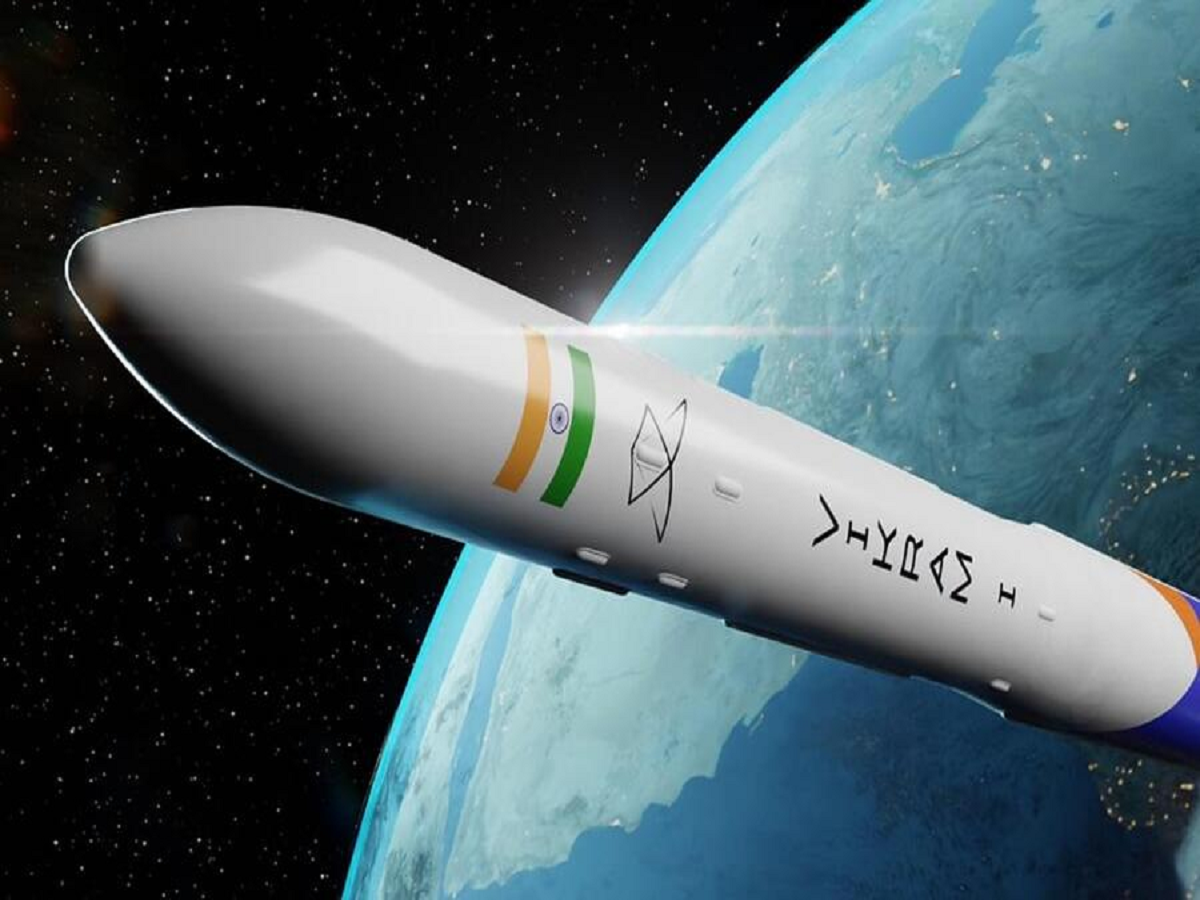
For decades, mentioning Indian space exploration conjured up a singular image: the brilliant, budget-conscious mastery of ISRO (Indian Space Research Organisation). But over the course of just a few weeks, a quiet tidal wave of private sector breakthroughs has radically reshaped the country’s space trajectory.
India’s private space tech sector has moved past assembling components for others—they are now building full-stack orbital ecosystems. Here is a look inside the massive milestones that defined the space landscape.
The Top Private Space Milestones
| Company | Key Milestone | Why It Matters |
| Skyroot Aerospace | Achieved Unicorn Status | Becomes India's first space-tech startup valued at over $1 Billion, validating immense global investor confidence. |
| Agnikul Cosmos | Cluster-fired four 3D-printed rocket engines | Proves rapid, single-piece hardware manufacturing can successfully handle intense semi-cryogenic propulsion. |
| Pixxel | Partnered with Sarvam AI for Orbital Data Centers | Shifts focus from just taking satellite images to processing data natively in space using artificial intelligence. |
| Dhruva Space | Secured ₹105 Crore funding for "Project Garud" | Kickstarts the domestic capability to manufacture heavy 500-kg class satellites for massive global constellations. |
1. Rockets Built by Printers: Agnikul’s Propulsion Leap
On May 19, Agnikul Cosmos pulled off a massive engineering feat by successfully test-firing four semi-cryogenic rocket engines simultaneously as a cluster. What makes this a game-changer is the manufacturing process: every single engine was 3D-printed as a single piece of hardware.
By eliminating the traditional, painfully complex welding of hundreds of individual engine parts, this method drastically slashes production time and manufacturing errors. It allows India to position itself as a high-speed, hyper-efficient assembly hub for small satellite launch vehicles.
2. Pixxel & Sarvam AI: Training Artificial Intelligence in Orbit
Up until now, Earth observation satellites operated on a basic model: take a picture of Earth, beam a massive, heavy data file down to ground stations, and wait hours for computers to analyze it.
Pixxel’s newly announced collaboration to build AI-powered orbital data centers aims to flip this entirely. By processing complex hyperspectral imaging data directly in space, satellites can instantly beam back critical, pre-digested insights.
Real-World Impact: Rather than downloading raw megabytes of data to see an agricultural region, a satellite can instantly flag exactly which fields are facing a pest outbreak or map border security anomalies in real time.
The Next Frontier: Constant Replenishment
The commercial driver behind this sudden boom is the global shift toward Low Earth Orbit (LEO) satellite constellations. Because these satellites operate closer to Earth, they have limited lifespans of roughly five to eight years before they degrade.
With liberalized government space policies opening doors to private capital, Indian startups are positioning themselves to be the go-to global factory not just for launching these networks, but for continuously replenishing them over the next decade.