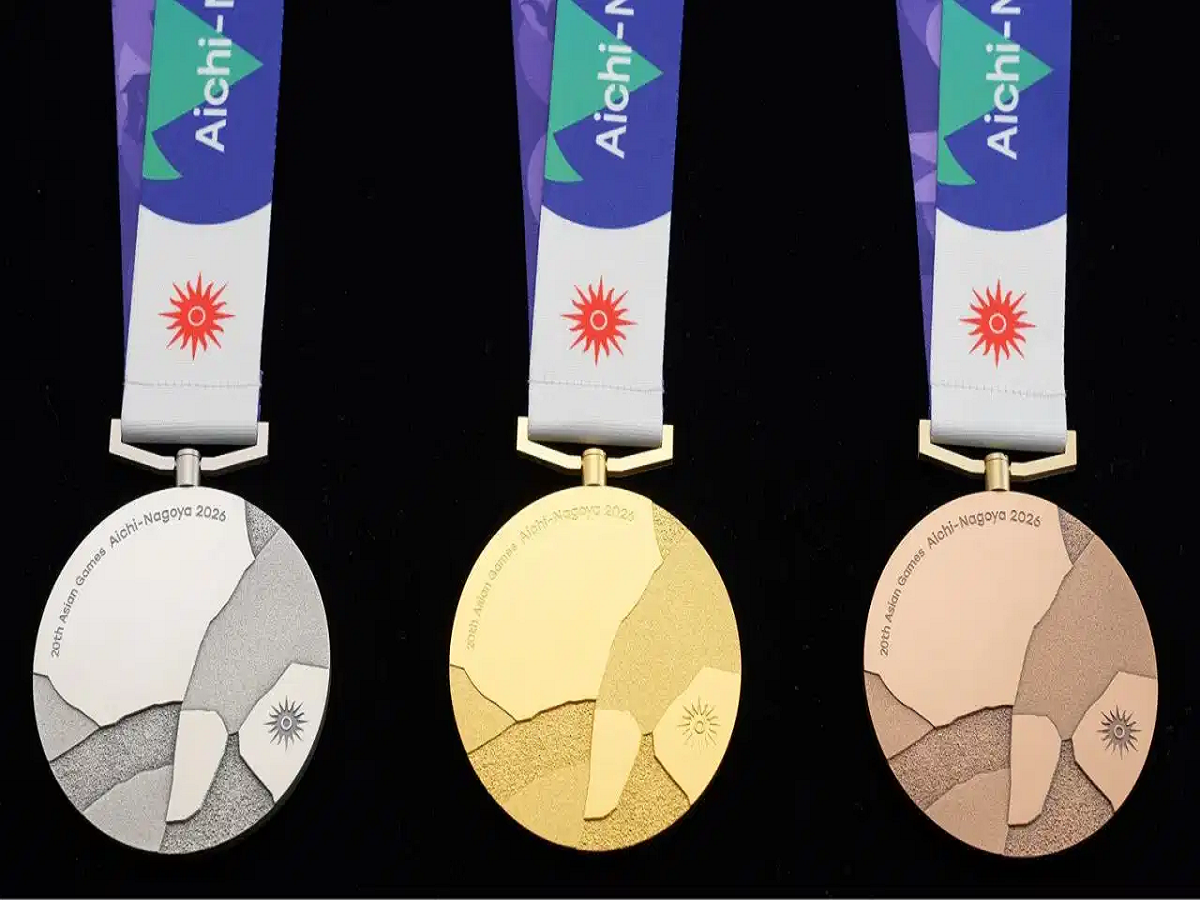
The medals for the 20th Asian Games in Aichi-Nagoya, Japan, are attracting attention for their distinctive design and the ideas they represent. Combining Japanese craftsmanship with a message of unity, the medals reflect the cultural diversity and sporting spirit of Asia.
The design was selected through a national competition and was created by Japanese designer Daisuke Shiba. His concept draws inspiration from the official Games slogan, "Imagine One Asia", as well as the theme of "Unity in Diversity".
But the medals are more than just a sporting prize. Their design incorporates several elements connected to Japanese culture, sustainability and the journey of athletes.
Who Designed the Asian Games 2026 Medals?
Japanese designer Daisuke Shiba created the winning medal concept.
For the design, Shiba experimented by deliberately breaking ceramic discs and observing how the resulting pieces could come together. The idea represents the different experiences that make up an athlete's journey — including setbacks, injuries, challenges, determination and hard work.
When these individual experiences come together, they form the achievement represented by the medal.
The concept also reflects the coming together of different cultures, languages and communities from across Asia through sport.
5 Key Features of the Asian Games 2026 Medals
1. Made Using Recycled Electronic Waste
Sustainability is one of the major features of the medals.
The metal used for the medals has been recovered from small electronic waste collected in Japan. The initiative highlights recycling and the idea of a circular economy, while giving discarded electronic materials a new purpose.
2. Ribbon Inspired by the Kakitsubata Flower
The medal ribbons feature a design inspired by the Kakitsubata, the official flower of Aichi Prefecture.
Its flowing curves are intended to represent qualities such as resilience and strength, connecting the natural beauty of the host region with the determination of athletes.
3. Hinoki Wood Medal Box
The medals will be presented in specially designed boxes made from Hinoki wood associated with Aichi.
The design draws inspiration from traditional Japanese tea culture, adding another element of Japanese craftsmanship to the medal presentation.
4. Large Circular Design
The medals have a circular shape with a diameter of approximately 8 cm and a thickness of around 5 mm.
Their size gives the medals a substantial appearance while providing enough space for the design elements and inscriptions.
5. Different Metals and Weights
The three medals have different compositions and weights.
-
Gold medal: Approximately 265 grams, made from pure silver and plated with at least 1 gram of gold
-
Silver medal: Approximately 264 grams, made from pure silver
-
Bronze medal: Approximately 222 grams, made from 95% copper and 5% zinc
A Medal That Represents More Than Victory
The Aichi-Nagoya 2026 Asian Games medals combine sport, Japanese culture and sustainability in a single design.
From recycled electronic waste and Aichi's Kakitsubata flower to Hinoki wood and the concept of bringing fragmented pieces together, every element has been designed to represent a part of the athletes' journey and the diversity of Asia.
Rather than representing victory alone, the medal's concept focuses on the struggles, experiences and collective efforts that ultimately lead to achievement.