BUSINESS
8th Pay Commission Update: Will Central Government Employees Get a Salary Hike From January 2026? Here's What We Know
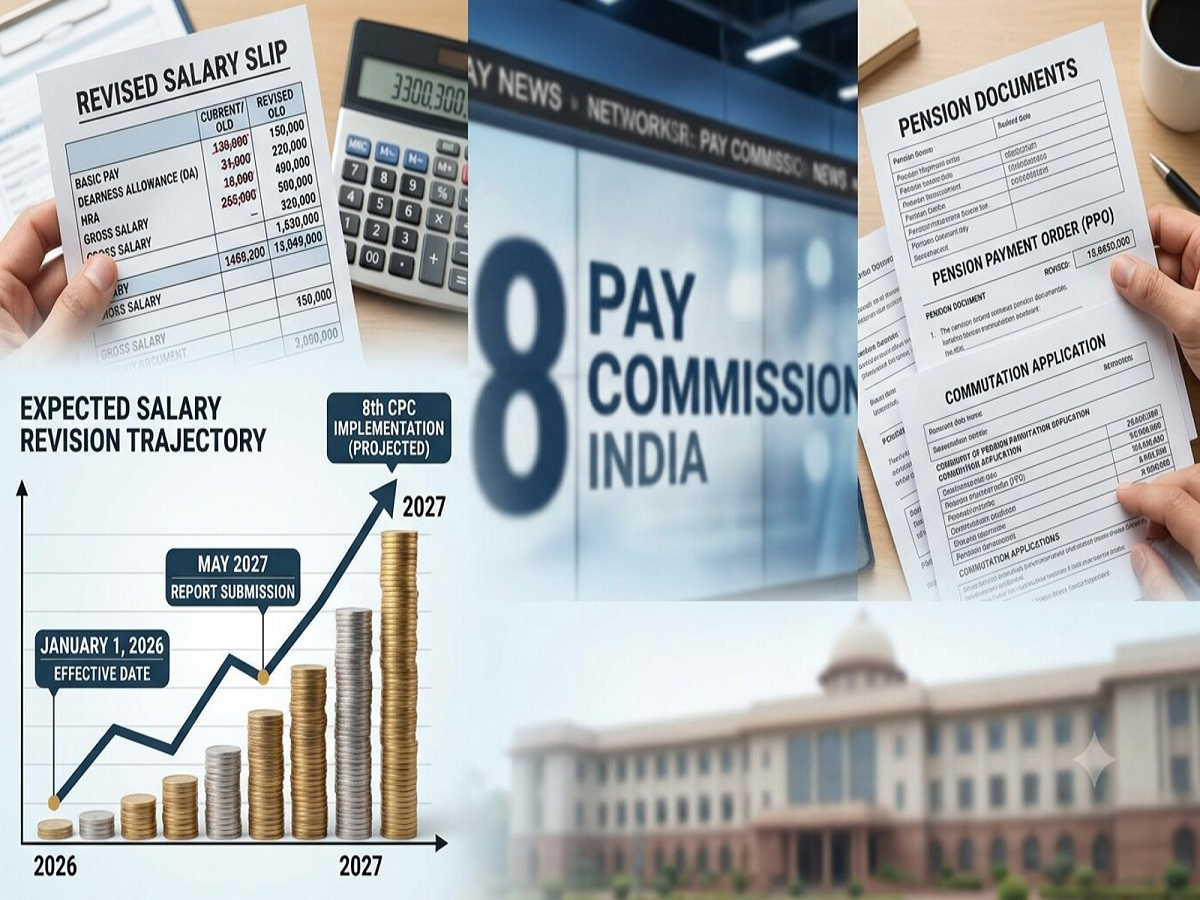
Central government employees and pensioners are eagerly waiting for the 8th Pay Commission, which is expected to bring changes to salaries, pensions and several allowances. The biggest questions remain how much the minimum basic salary will increase, what fitment factor will be recommended and when employees will actually receive revised payments.
The 8th Central Pay Commission was formally constituted on November 3, 2025. It has been given 18 months to submit its recommendations to the government. This means the commission's prescribed deadline falls around May 3, 2027.
However, employees should not confuse the expected effective date with the actual date of implementation. Although January 1, 2026, is widely considered the likely effective date based on the usual 10-year pay commission cycle, the government has not officially confirmed the implementation date.
1. What Is the Latest Status of the 8th Pay Commission?
The commission is reviewing the salary structure, allowances, pensions and other service conditions of central government employees. It is also consulting employee organisations, pensioner associations and other stakeholders to understand their demands.
The commission is headed by Justice Ranjana Prakash Desai. Professor Pulak Ghosh is its part-time member, while Pankaj Jain is the member-secretary.
The commission has been conducting consultations and collecting representations from different groups. However, as of November 26, 2026, it has not submitted its final recommendations to the government.
2. What Could Be the New Minimum Basic Salary?
The minimum basic salary is one of the most discussed issues surrounding the 8th Pay Commission.
Under the 7th Pay Commission, the minimum basic pay was increased from Rs 7,000 to Rs 18,000 using a fitment factor of 2.57.
For the 8th Pay Commission, employee organisations have demanded a significantly higher minimum salary. One proposal submitted by the National Council (Joint Consultative Machinery) staff side seeks a minimum basic pay of Rs 69,000 and a fitment factor of 3.833.
However, this is an employee-side demand and not an approved salary structure. The final minimum basic pay will depend on the commission's recommendations and the government's decision.
3. What Is the Expected Fitment Factor?
The fitment factor plays an important role in calculating revised basic pay. It is a multiplier used in the pay fixation process to determine an employee's new basic salary.
The 7th Pay Commission used a fitment factor of 2.57. For the upcoming revision, several employee organisations have demanded a higher multiplier, with proposals including 3.833.
A higher fitment factor could result in a larger increase in basic pay. However, no official fitment factor has been announced by the 8th Pay Commission so far.
Employees should therefore be cautious about salary projections circulating online, as these are based on assumptions and proposals rather than confirmed government figures.
4. Will Pensioners Also Get Benefits?
The 8th Pay Commission is not limited to serving government employees. Its mandate also covers pension-related matters, including retirement benefits and family pensions.
This means central government pensioners are also awaiting recommendations on revised pension calculations. The treatment of existing pensioners, including those who retired before the new pay structure comes into effect, will depend on the commission's recommendations and the government's final decision.
The final report is also expected to examine other retirement-related benefits, making it important for both serving employees and retired personnel.
5. When Will the 8th Pay Commission Be Implemented?
January 1, 2026, is the anticipated effective date based on the traditional 10-year cycle followed by successive Pay Commissions. However, the actual implementation timeline has not been officially confirmed.
The commission has until May 2027 to submit its recommendations. After that, the government will examine the report and decide which recommendations to accept before issuing implementation orders.
If the government approves January 1, 2026, as the retrospective effective date, eligible employees and pensioners may receive arrears for the applicable period. However, the payment schedule and calculation will depend on the final government notification.
What Should Employees Expect Next?
The next major development will be the submission of the commission's recommendations. Employees are particularly interested in the final fitment factor, revised minimum basic pay, allowances and pension calculations.
For now, there is no officially confirmed salary hike percentage or final fitment factor. The demands made by employee organisations should not be treated as approved benefits.
The 8th Pay Commission could bring significant changes to the compensation structure of central government employees and pensioners, but the final financial impact will become clear only after the commission submits its report and the government takes a decision.